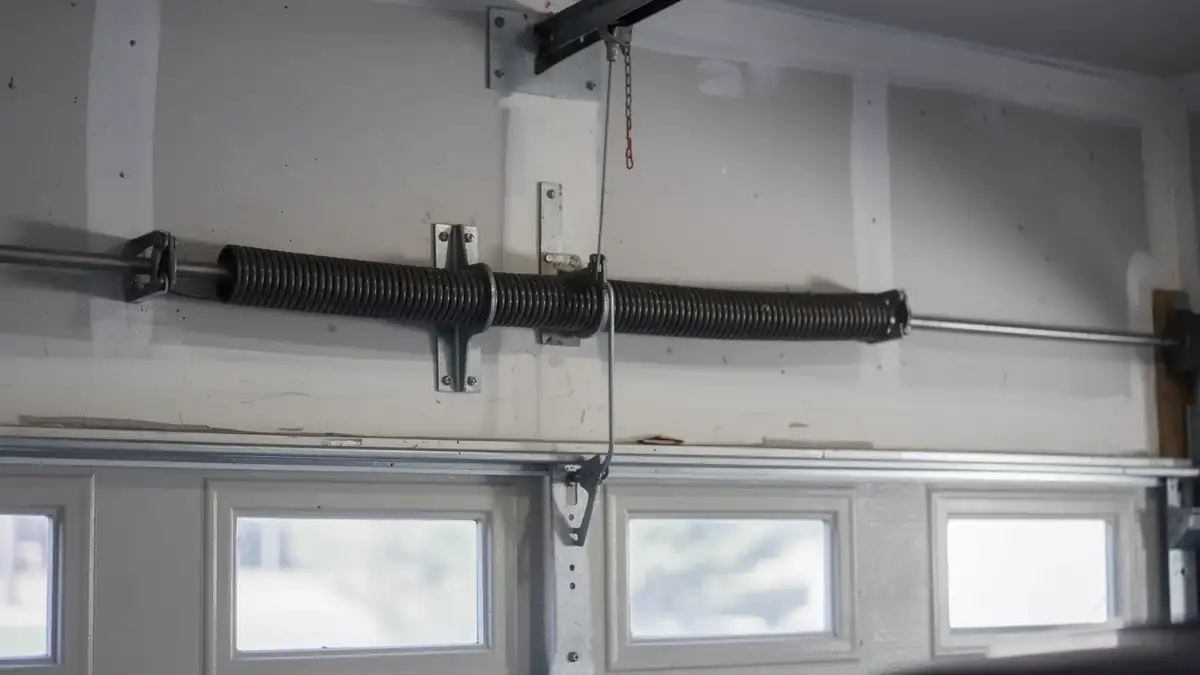
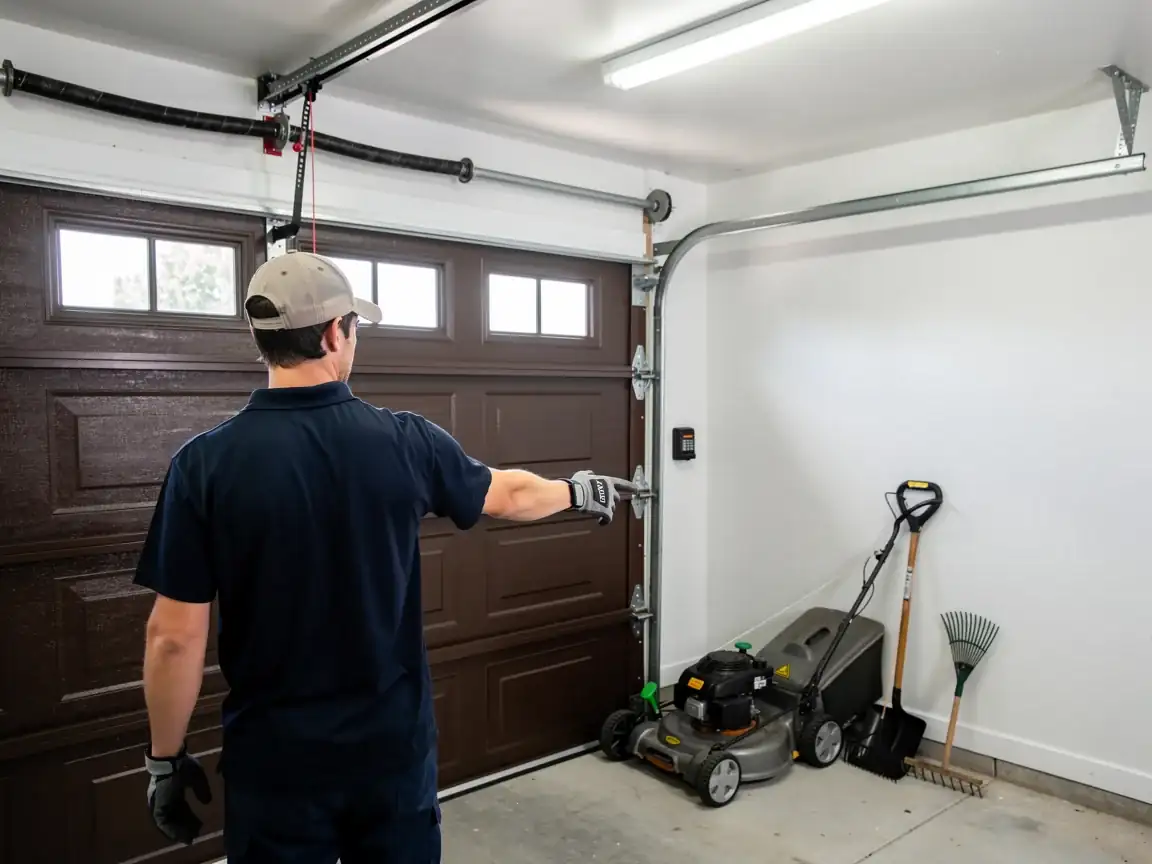
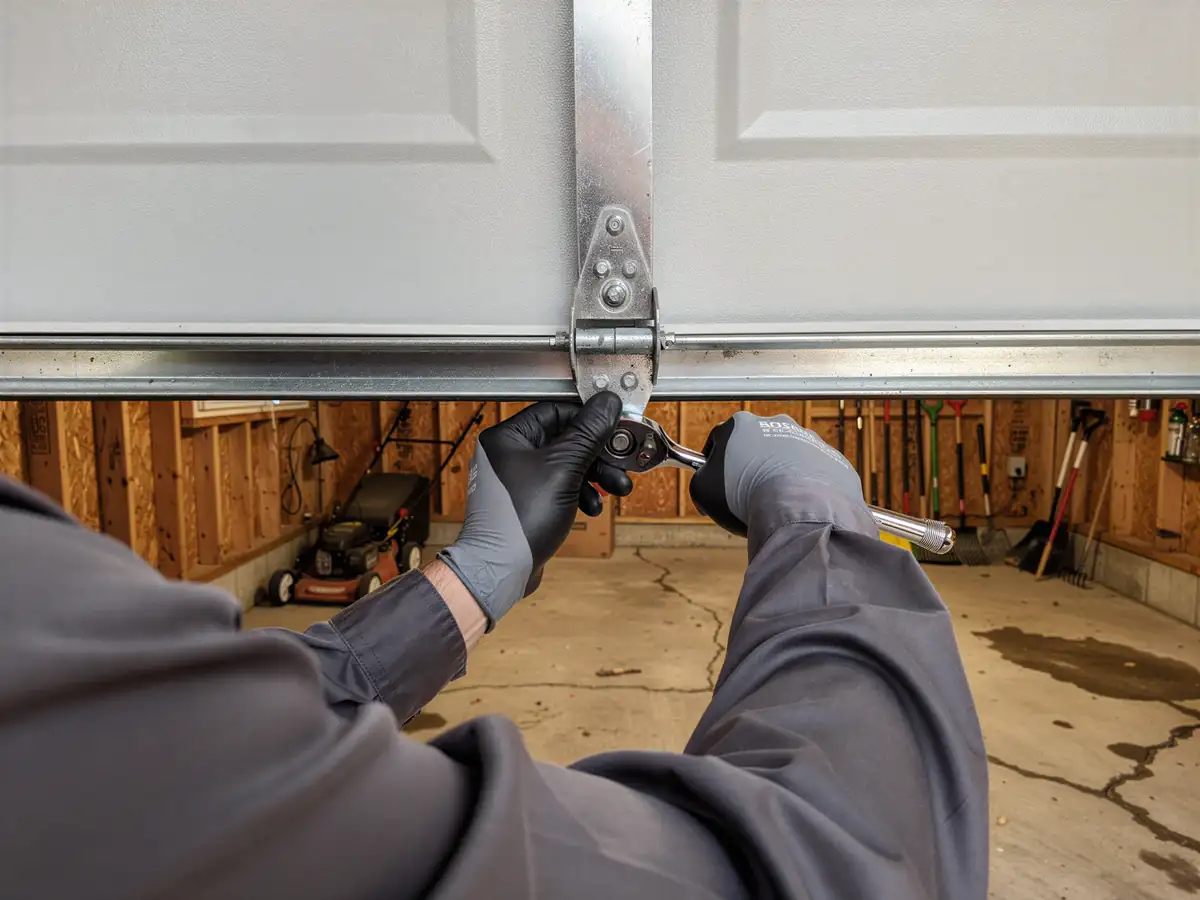
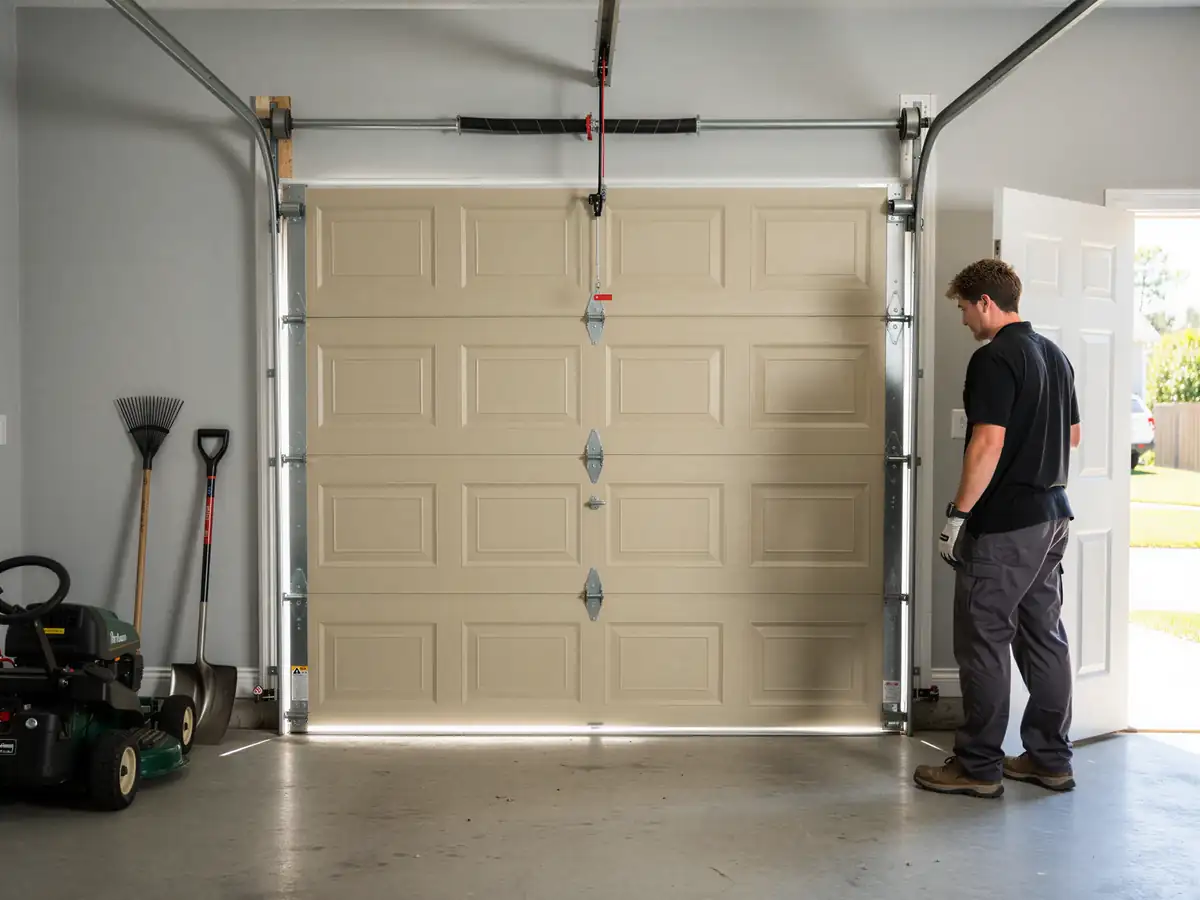
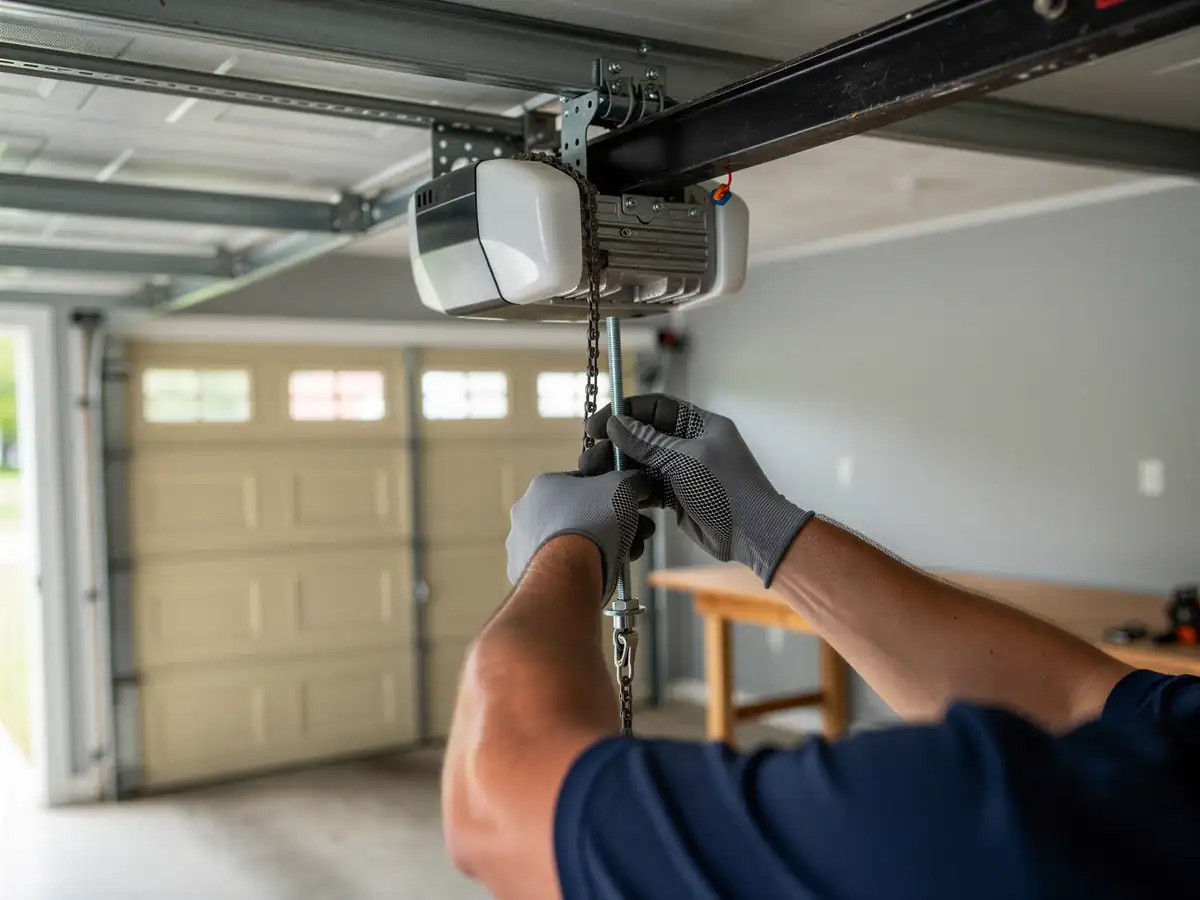
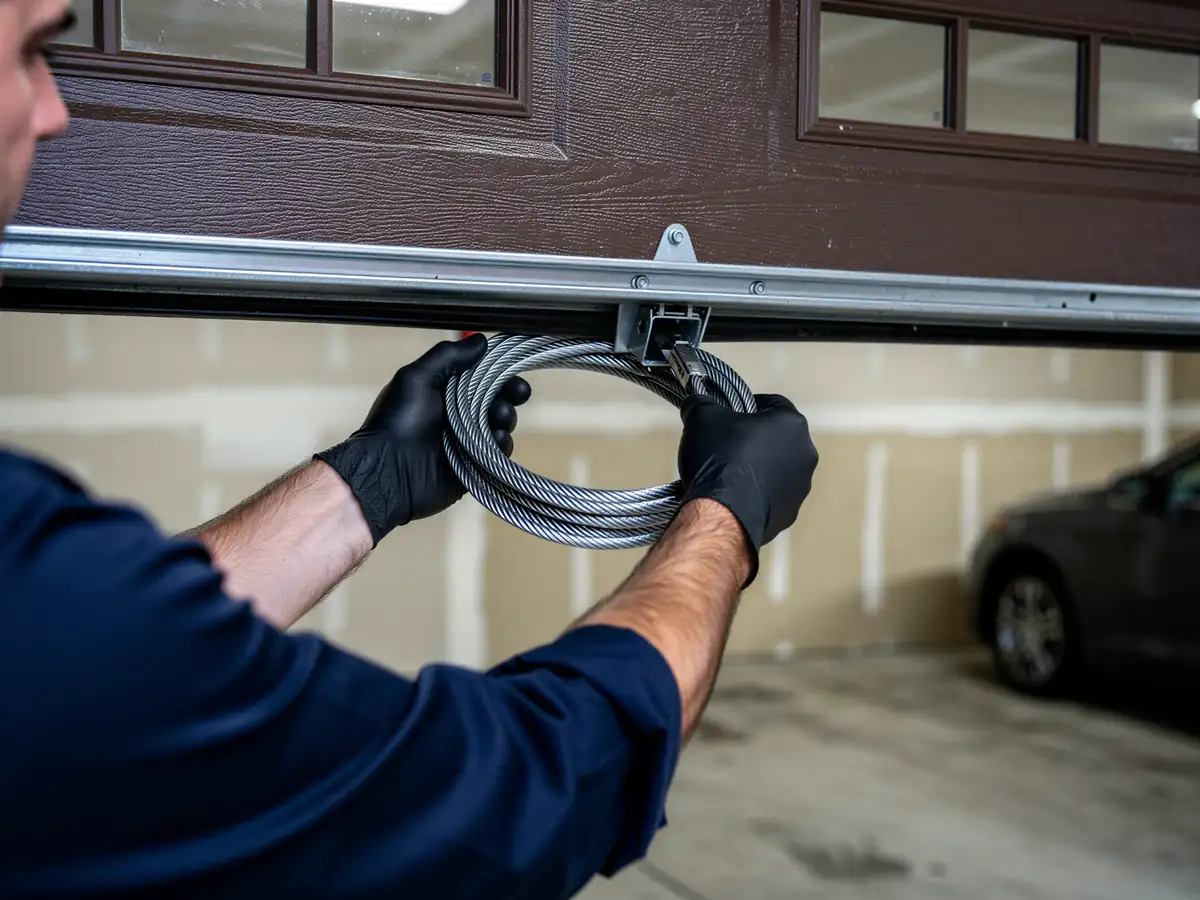
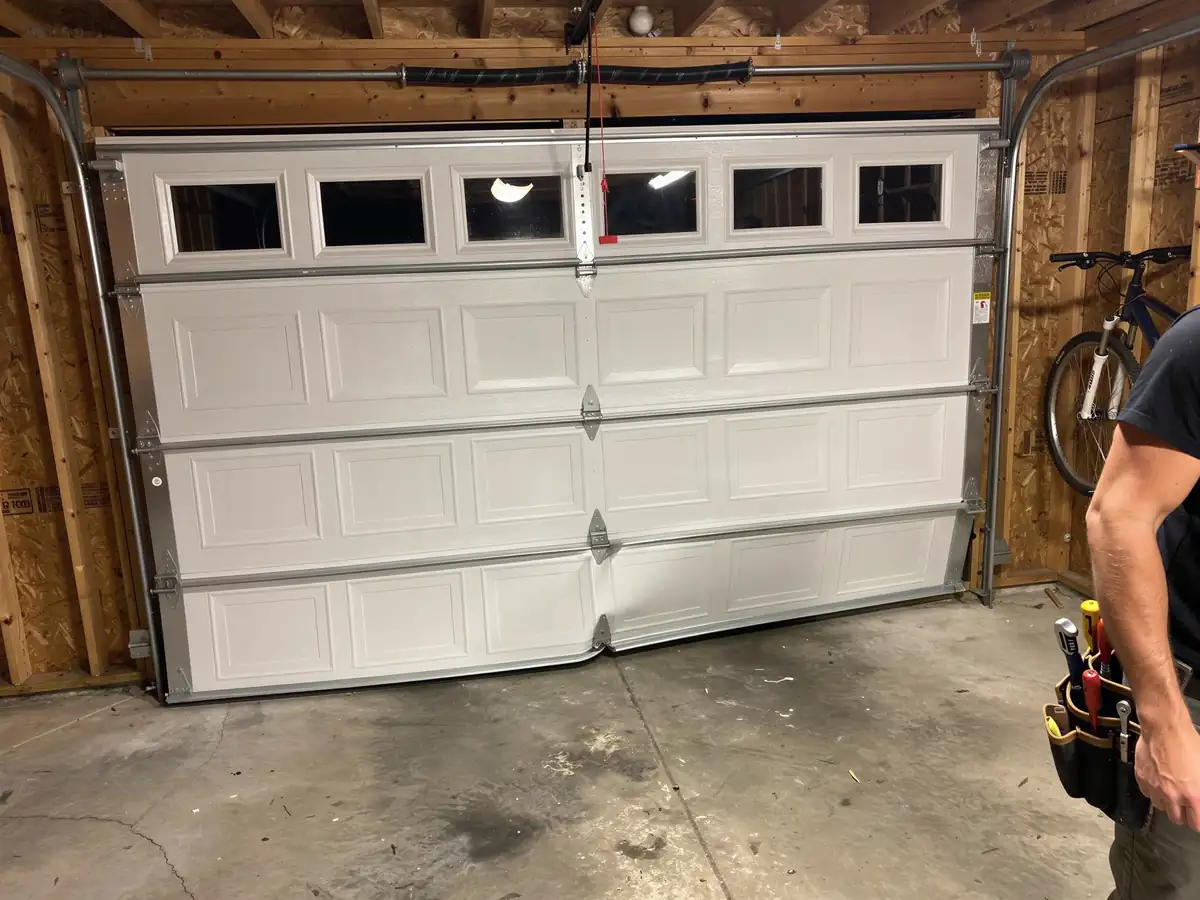
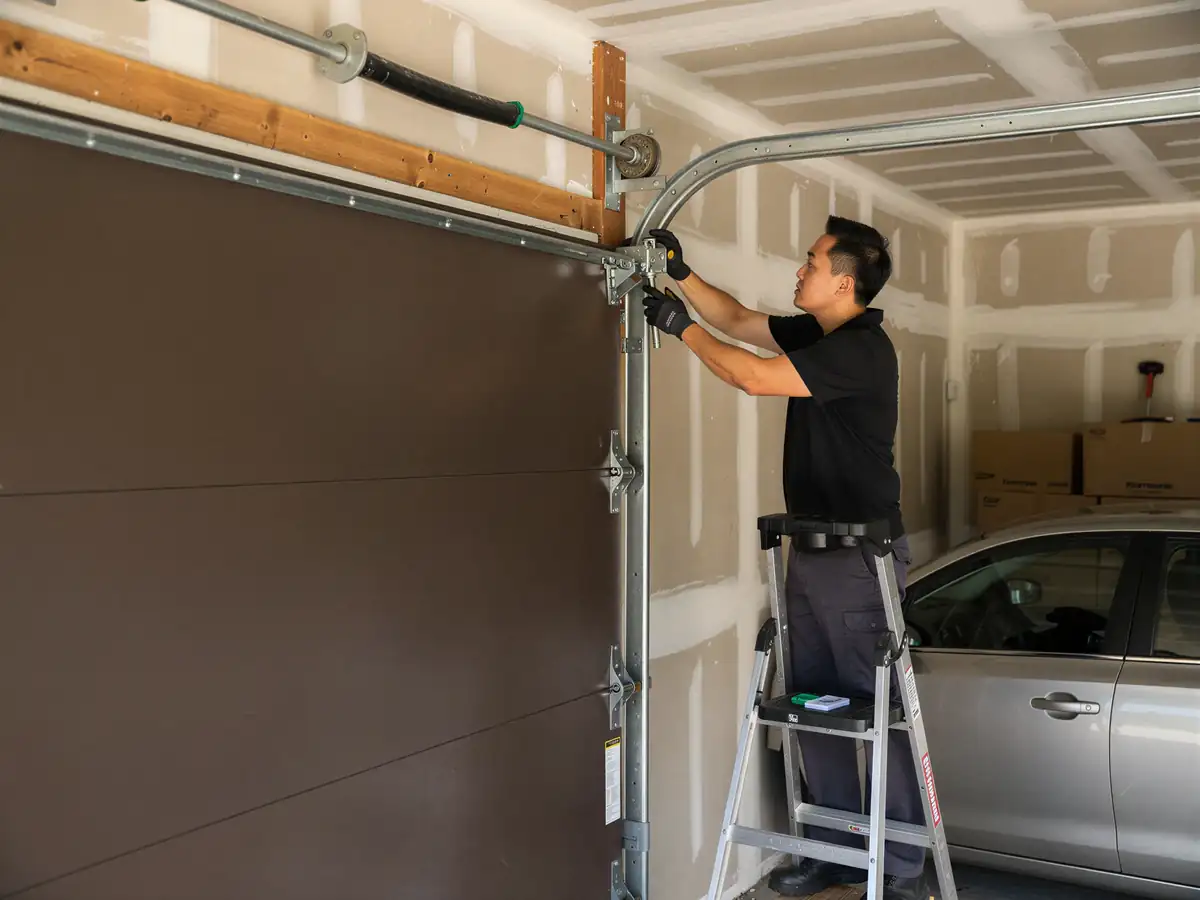
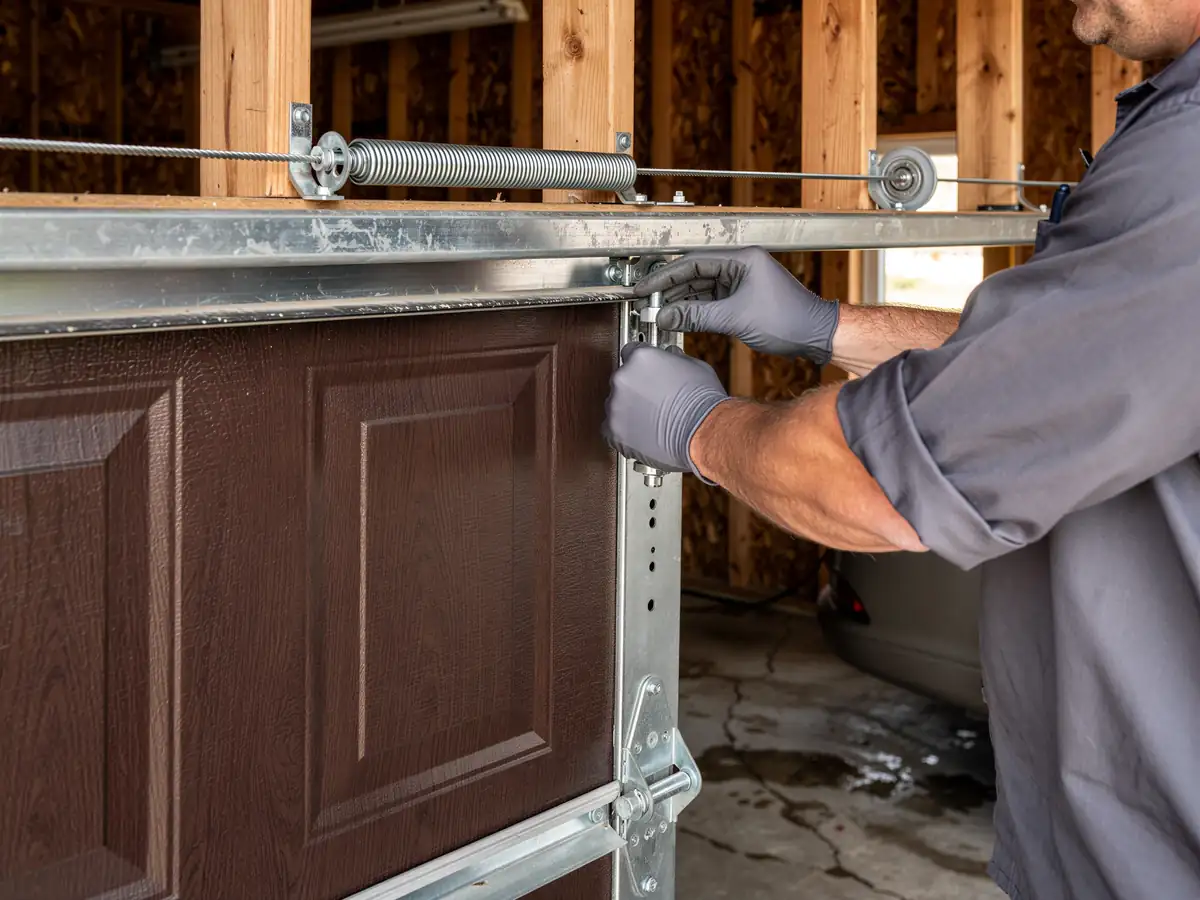
We can't quote you a number here without seeing the door, and we're not going to pretend otherwise. What we can tell you is what drives the number up or down in this area. Most Bentonville houses were built between 1987 and 2013, with the median landing around 1996 - that's roughly a 25-to-35-year-old torsion spring and opener setup in a lot of garages right now. Springs are rated in cycles, and a spring installed when a house went up in the mid-90s is well past its working life by now. That means more of the calls we run in this town are spring replacements and opener swaps, not quick adjustments. A door that's only a track alignment or a roller swap costs a lot less than one needing a new spring set and a new opener motor at the same time. If your house falls in that 1987-2013 build window, budget for the bigger job before you call, not the small one. We'll tell you straight if it's a $40 fix or a full spring-and-opener job - we just won't guess at a number before we're standing in front of the door.
How Local Conditions Play In
Bentonville sits in a cold-moderate climate band, which matters more for garage doors than most people think. Steel contracts in cold air, and a torsion spring under tension behaves differently at 20 degrees than it does at 70. When a spring goes in cold weather, it tends to go suddenly and loudly rather than gradually - homeowners describe a bang, not a slow sag. That's the metal losing flexibility right at the moment of highest load. It's also why we see more opener strain calls in winter: a cold motor pulling a door that's slightly stiffer than it was in August works harder every single cycle. None of this means you need to do anything differently day to day. It means that if your spring is already near the end of its cycle count - which, given the 1987-2013 housing stock here, a lot of them are - winter is when it tends to show. If you hear a new noise from the door in a cold stretch, that's worth a look before it becomes a dead spring and a stuck car.
Doing Nothing For Now
Not every noise or slow spot is a call-now situation, and we'd rather tell you that than drum up a job. If your door is still opening and closing on its own power, lifting evenly on both sides, and the opener isn't straining audibly, you can usually wait. What changes that answer is the age of the house. With median construction around 1996 across this service area, a lot of original hardware is getting close to or past its rated cycle count, and a spring at the end of its life doesn't give much warning before it snaps. So 'doing nothing' is a reasonable short-term call, but it's not a forever call for a door that's original to a mid-90s build. The honest version of this advice: if the house falls in that 1987-2013 window and nobody's touched the spring since move-in, you're not avoiding a repair by waiting - you're just choosing when it happens, and cold weather tends to pick for you.
The Situation
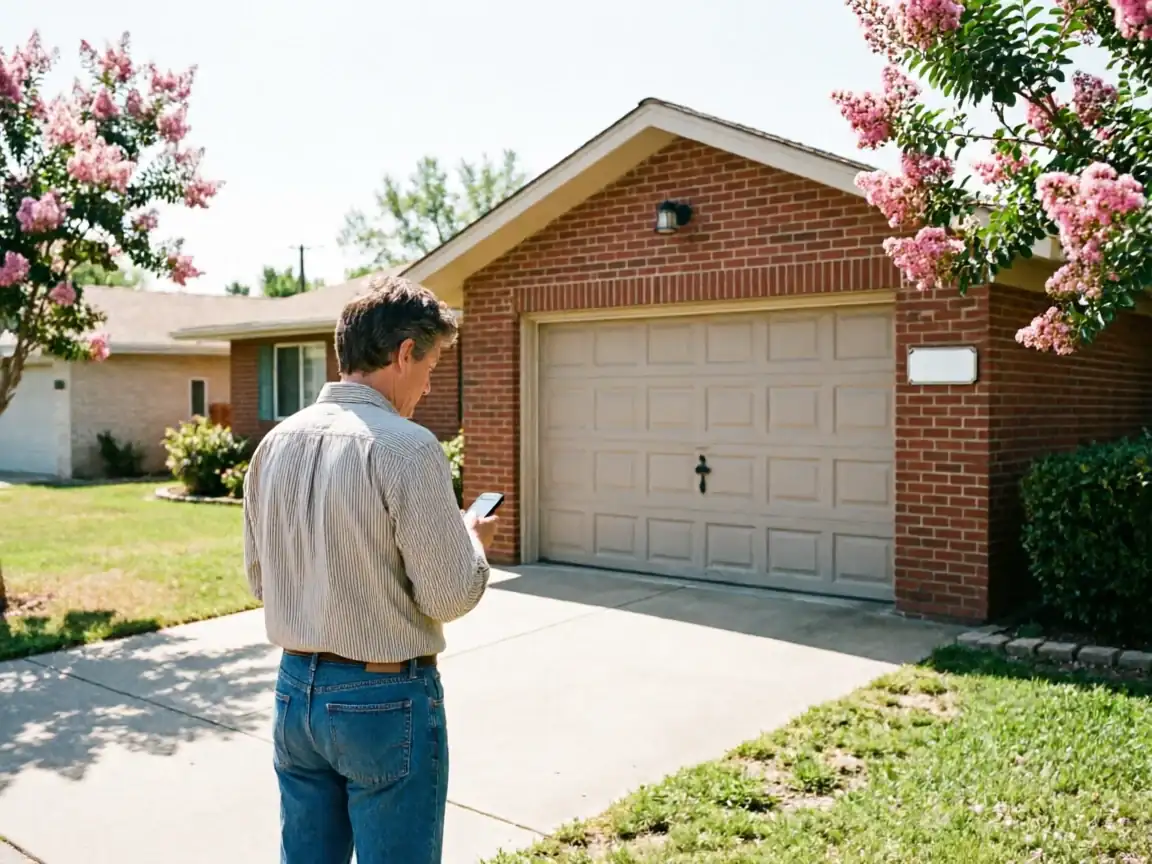
Bentonville's housing stock skews newer than a lot of Northwest Arkansas towns - built mostly 1987 to 2013, spread across the area's roughly 16 named neighborhoods, with median household income here at $86,541 across about 39,766 households and 27,576 owner-occupied houses. That combination matters for garage doors in a specific way: these aren't 1960s one-piece doors with obsolete hardware, they're mostly sectional doors on torsion springs, which is good news for parts availability but doesn't make the springs last forever. A door installed when a house was built in 2001 is over two decades old now, and that's squarely in failure territory for the original spring, regardless of how well the door looks. We work across this service area, from out toward Centerton and Little Flock, and the pattern holds across most of it - similar build era, similar climate exposure, similar point where the original hardware starts failing. If your house fits that window, that's the context worth knowing before anything breaks.
How it works
From “it’s stuck” to “it’s fixed”
01
Tell us what’s wrong
Describe the symptom - won’t open, loud bang, opener runs but the door won’t move.
02
On-site diagnosis
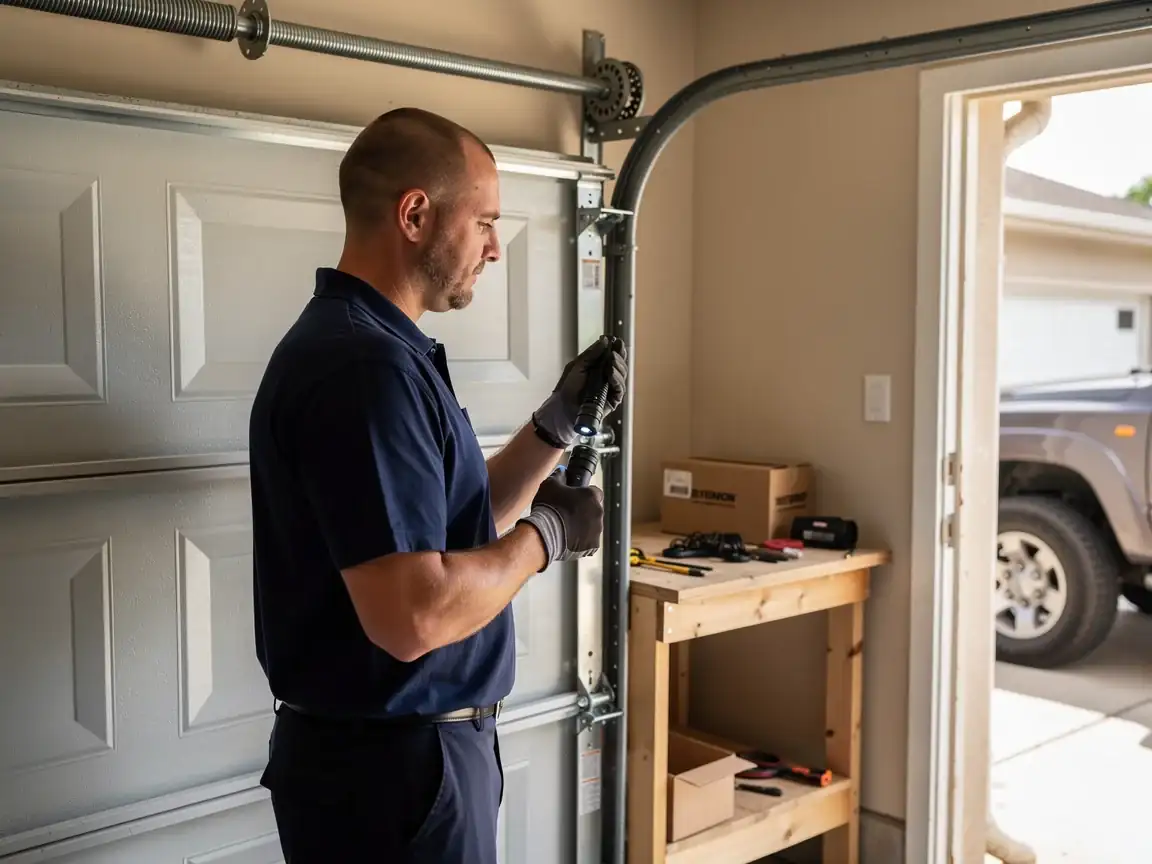
A technician tests the door under power and by hand and finds what actually failed.
03
Clear, up-front plan
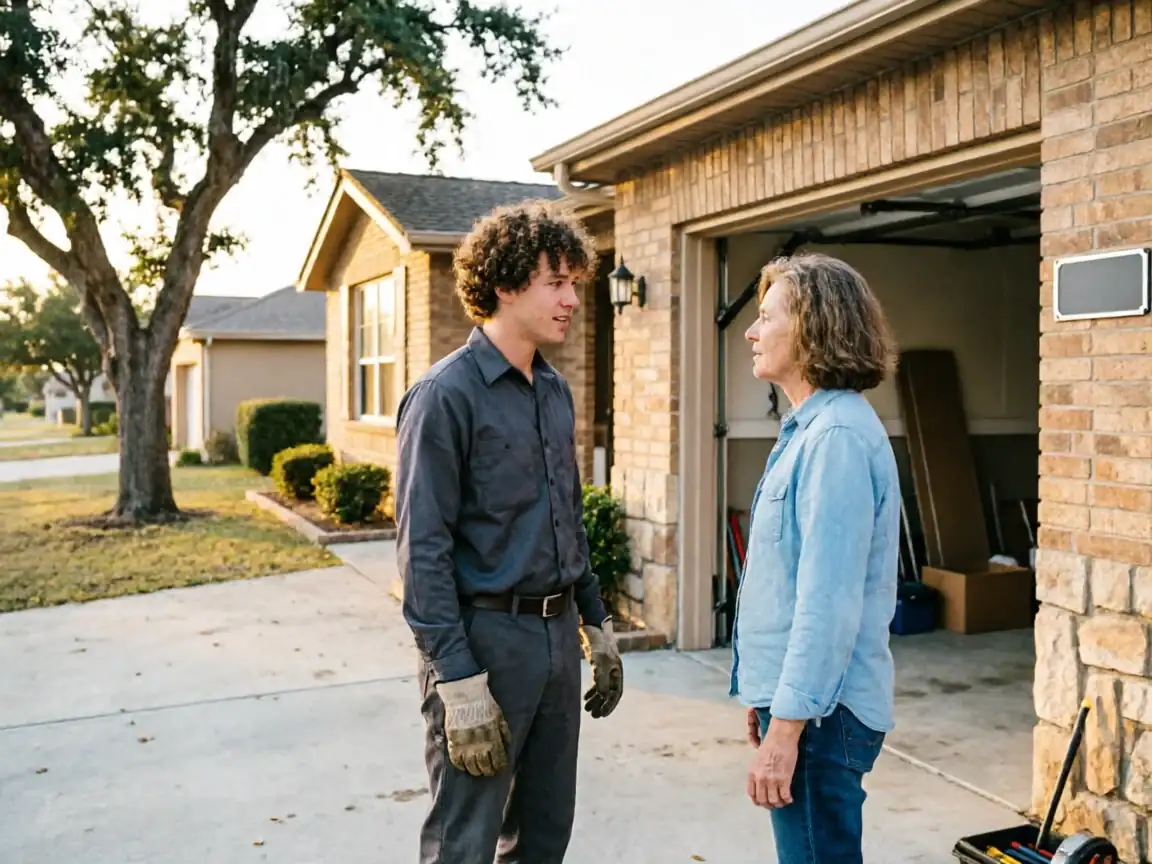
You get the fix that’s needed and what drives the cost - before any work starts.
04
Repaired & tested
The repair is done, the door is set true and tested, and the work area left clean.
Not sure which repair your door needs in Bentonville, AR? Describe what it’s doing - every job starts with a diagnosis.
Why did my spring snap in the middle of winter with no warning?
Cold air stiffens steel, and a torsion spring already near the end of its cycle count is more likely to fail suddenly in cold weather than gradually. If your house dates to the 1987-2013 building boom here, the original spring may simply be at the end of its rated life, and a cold snap is often what finally breaks it.
Is my opener old enough to be a concern?
If your house was built in the common 1987-2013 window for this area, and the opener is original, it's likely 10-35 years old. Openers don't have a hard failure point like springs, but motors under winter load strain more, and an aging opener paired with a tired spring is a common combination we see.
Can I just wait and see if the noise goes away?
Sometimes, yes - if the door still opens evenly and the opener sounds normal, you can wait. But a spring near end-of-life doesn't usually get quieter before it fails; it tends to go suddenly, often in cold weather. If the house is in that 1987-2013 build range, waiting isn't risk-free.
Ready to get your garage door sorted?
Tell us what it’s doing and where you are in Bentonville - we’ll take it from there.