The Complications
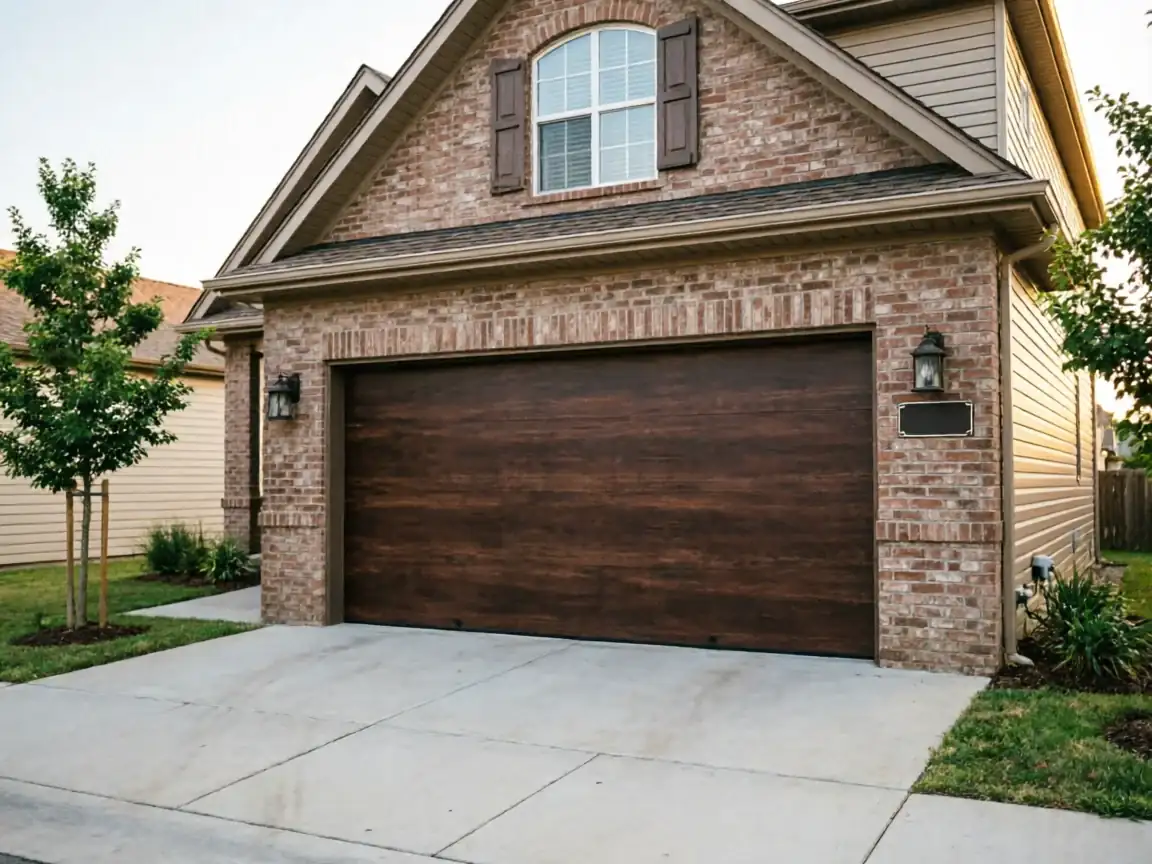
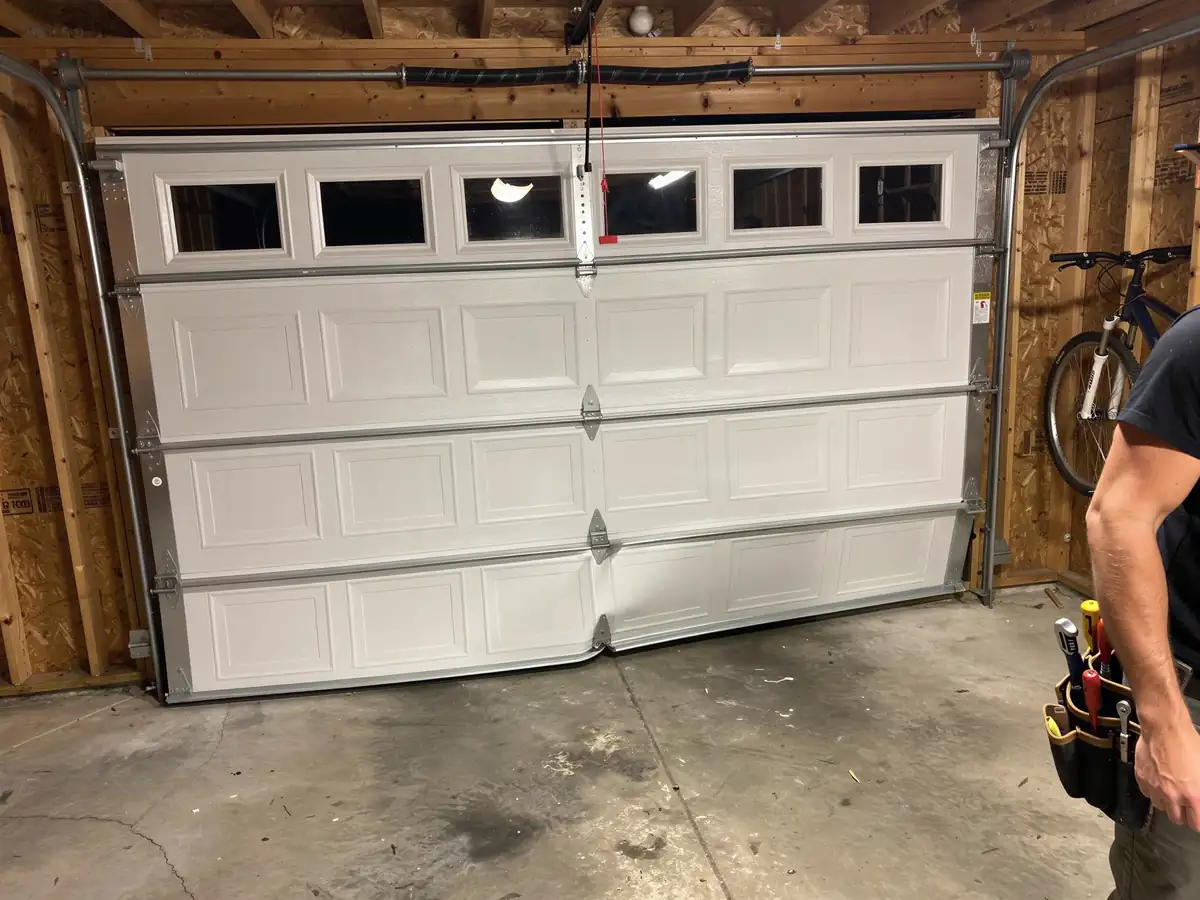
Decatur sits about 13 miles out from Bentonville, which matters for how a repair gets scheduled - this isn't a town we're parked next to, so an off-track call here goes on the route rather than getting a same-day drop-by promise. If a door comes off track on a two-car garage and nobody forces it further, it can usually wait a day without getting worse. Forcing it, though, turns a bent track into a torn track, and that's a different repair. Decatur also has roughly 607 households, which is a small enough base that the specialty suppliers who stock odd-length or early-90s-spec track sections don't keep local shelf space for it - that hardware comes from Bentonville with us, not off a shelf down the street. And Decatur's median household income, $43,239, runs well under the wider area's $86,541, which is worth saying plainly: on an older door, we'll tell you straight when a track repair makes sense and when the opener, springs, and track are all old enough that sinking money into one part just delays the same call next year.
Parts We Carry
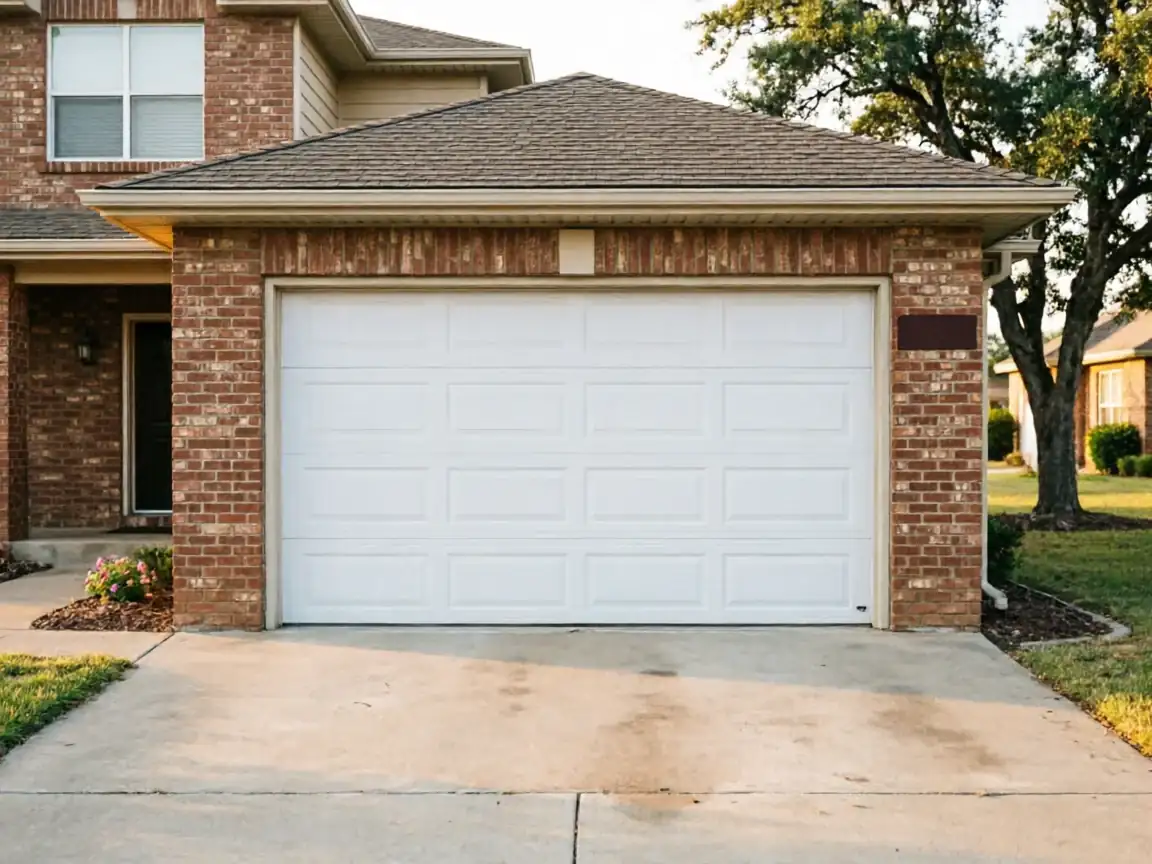
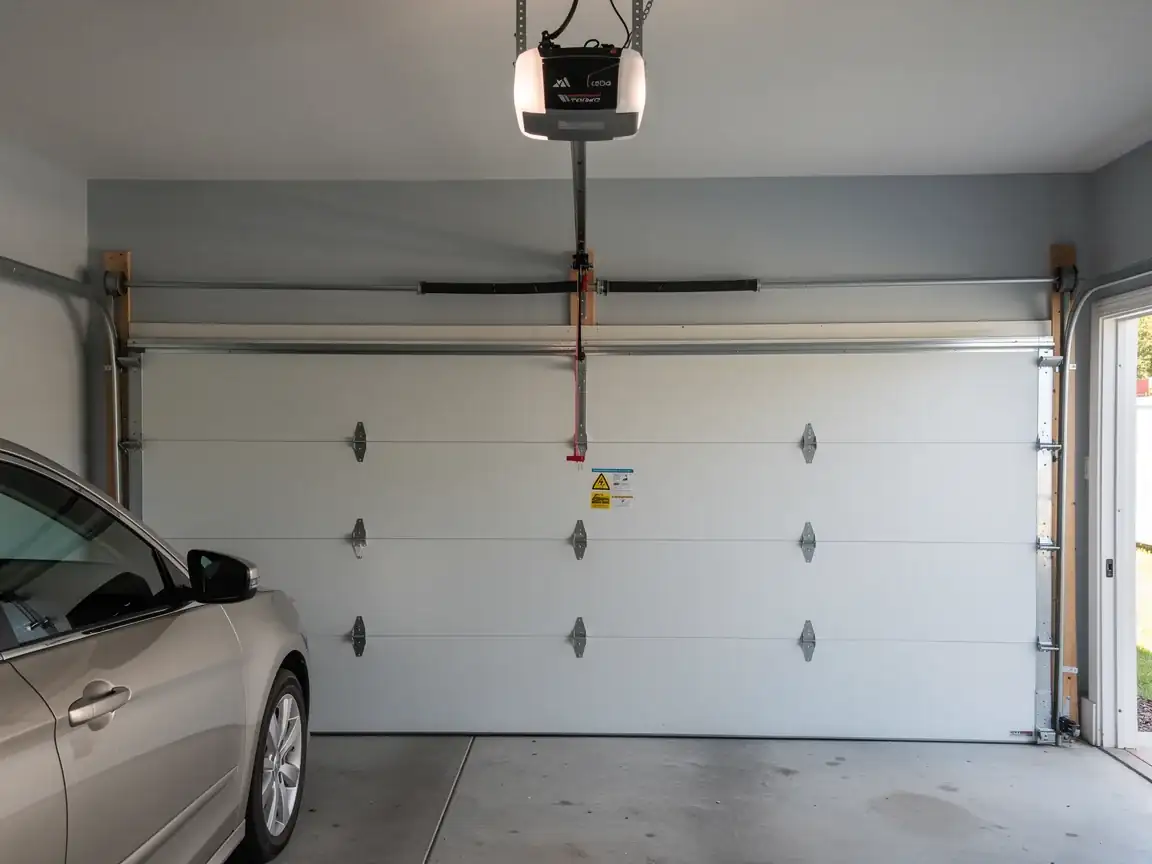
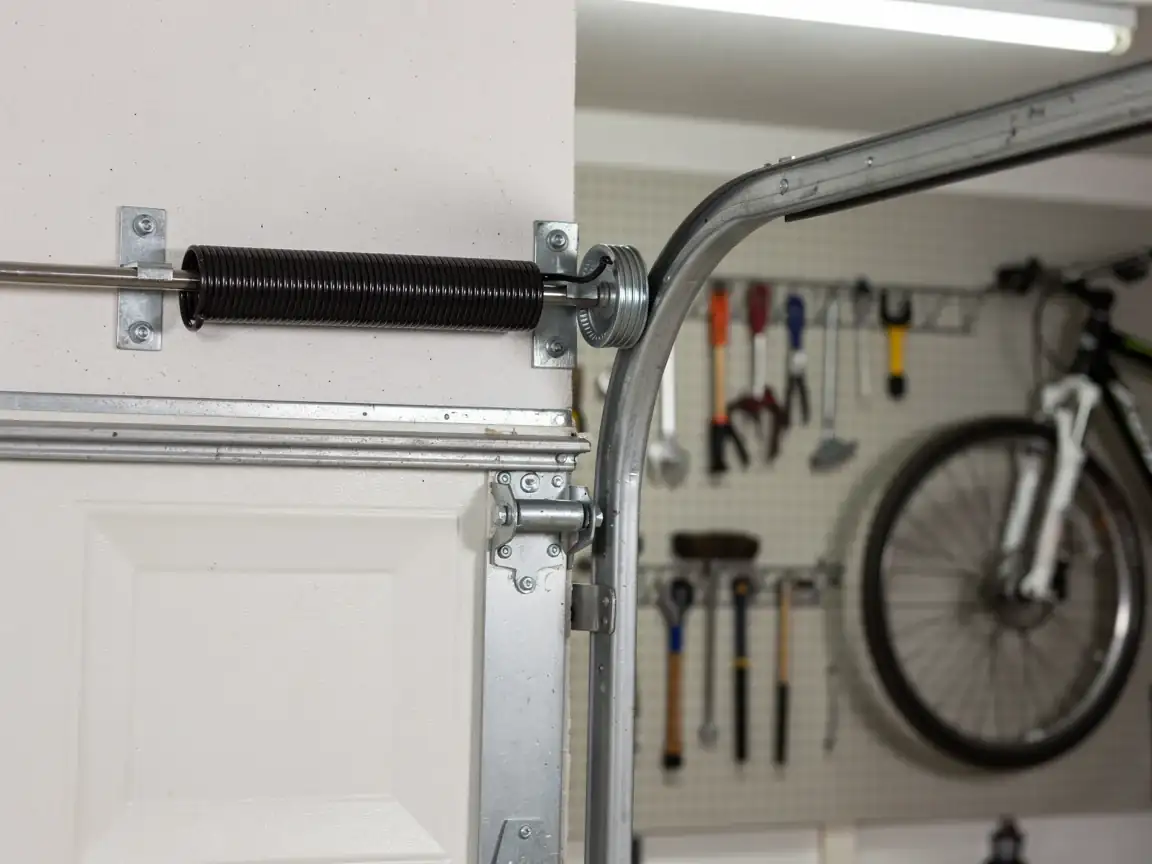
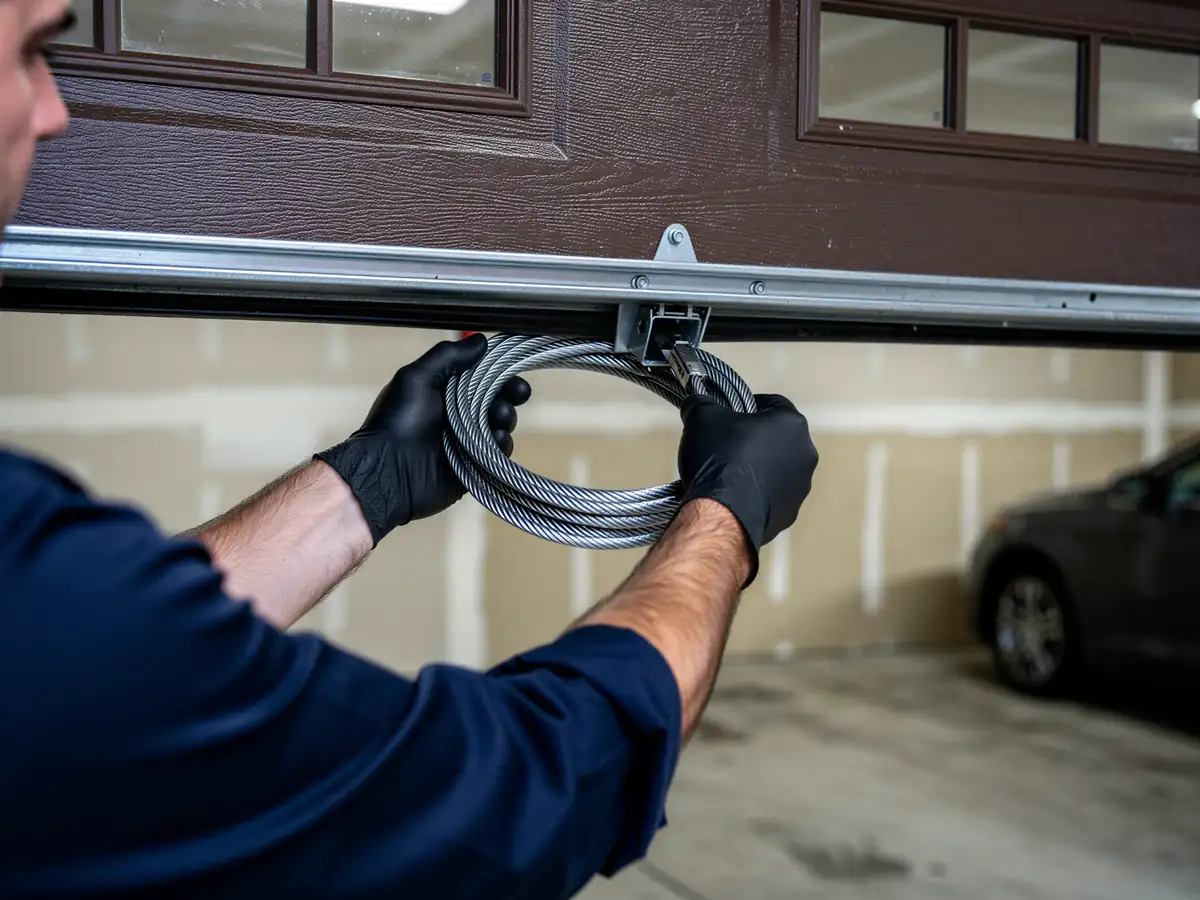
We carry standard torsion and extension track sections, roller brackets, and rear track hangers sized for the residential door widths common on 1990s-era Decatur garages - mostly 9-foot and 16-foot double doors on steel track. We also carry replacement nylon and steel rollers, since a worn roller is often what started the derailment in the first place even when the track itself is salvageable. What we don't keep on the truck is anything custom-width or discontinued - some original track hardware from the early 90s was spec'd to doors that aren't made anymore, and if a section's bent beyond straightening and doesn't match current stock widths, we'll tell you that on site rather than guess. That's the one honest limit here: a bent original track can sometimes be re-aligned and reused, but if the steel's kinked past a clean bend, we're replacing the run, not patching it, and we'll say so before we start rather than after.
How We Fix It
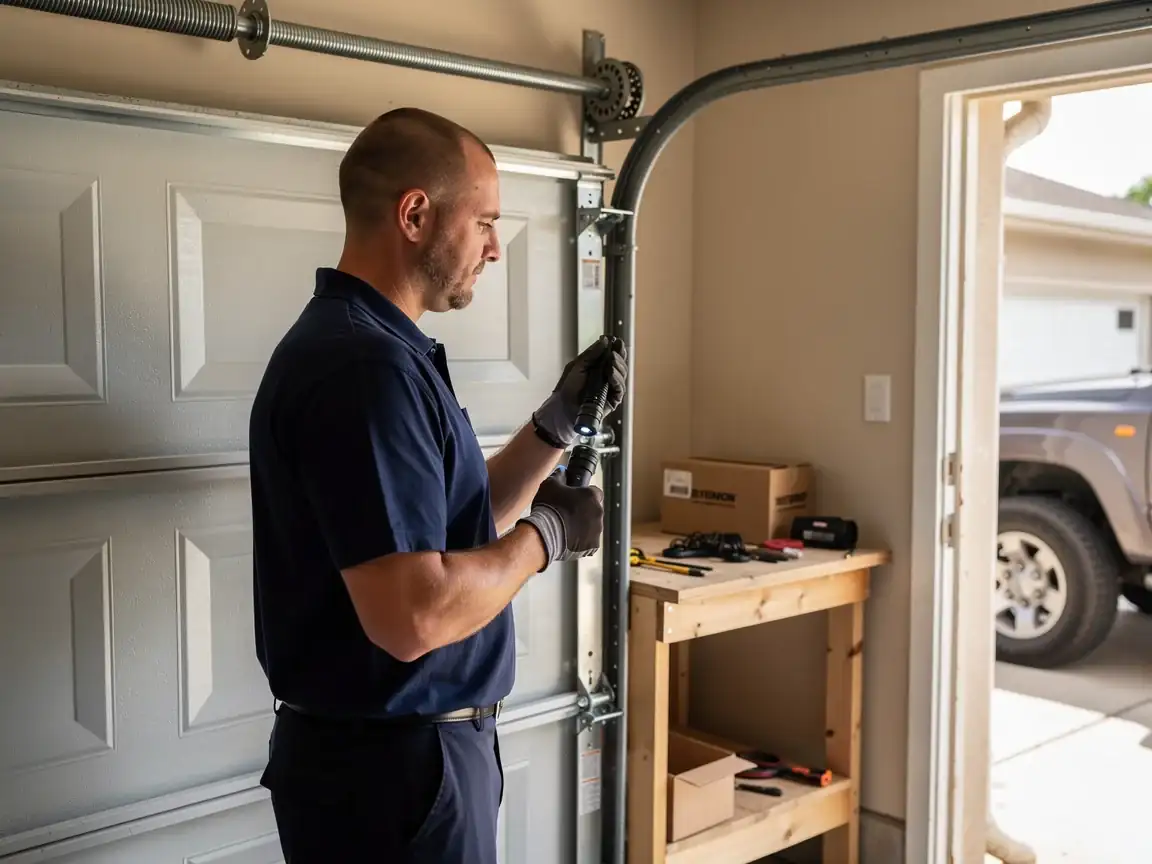
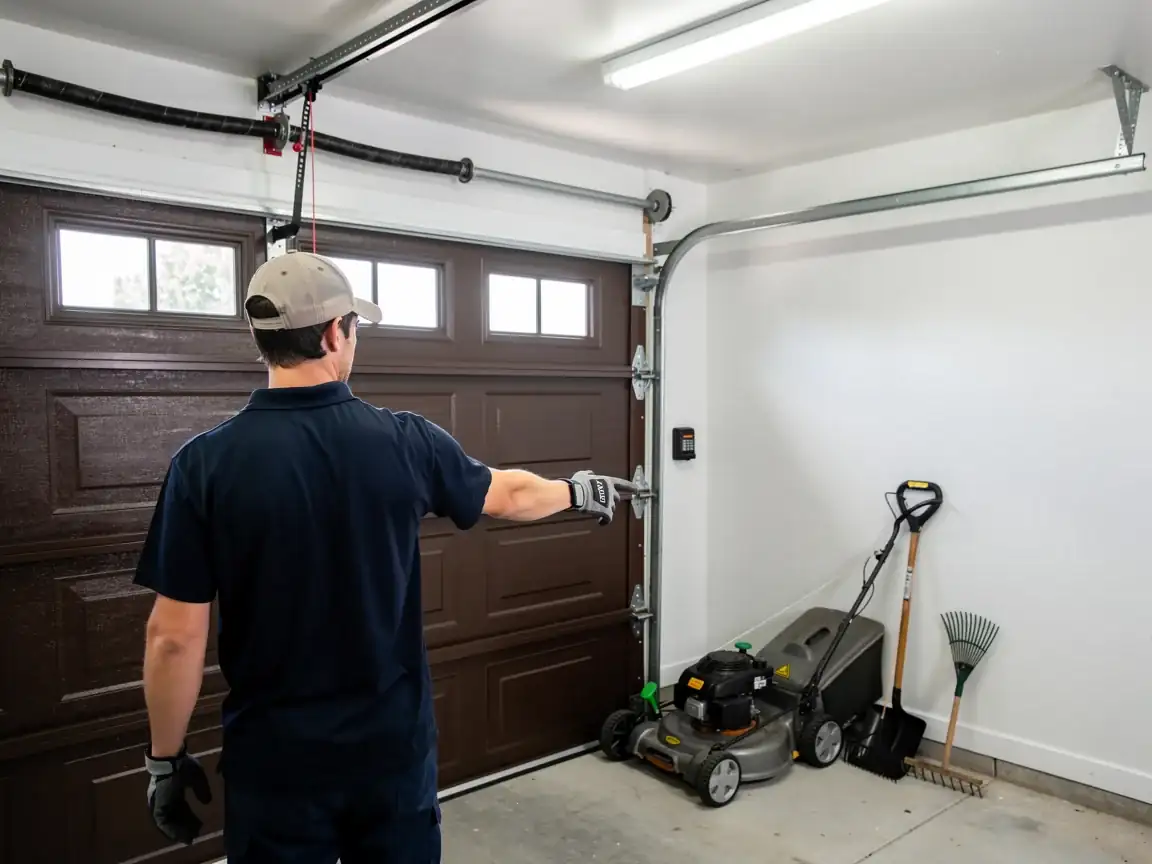
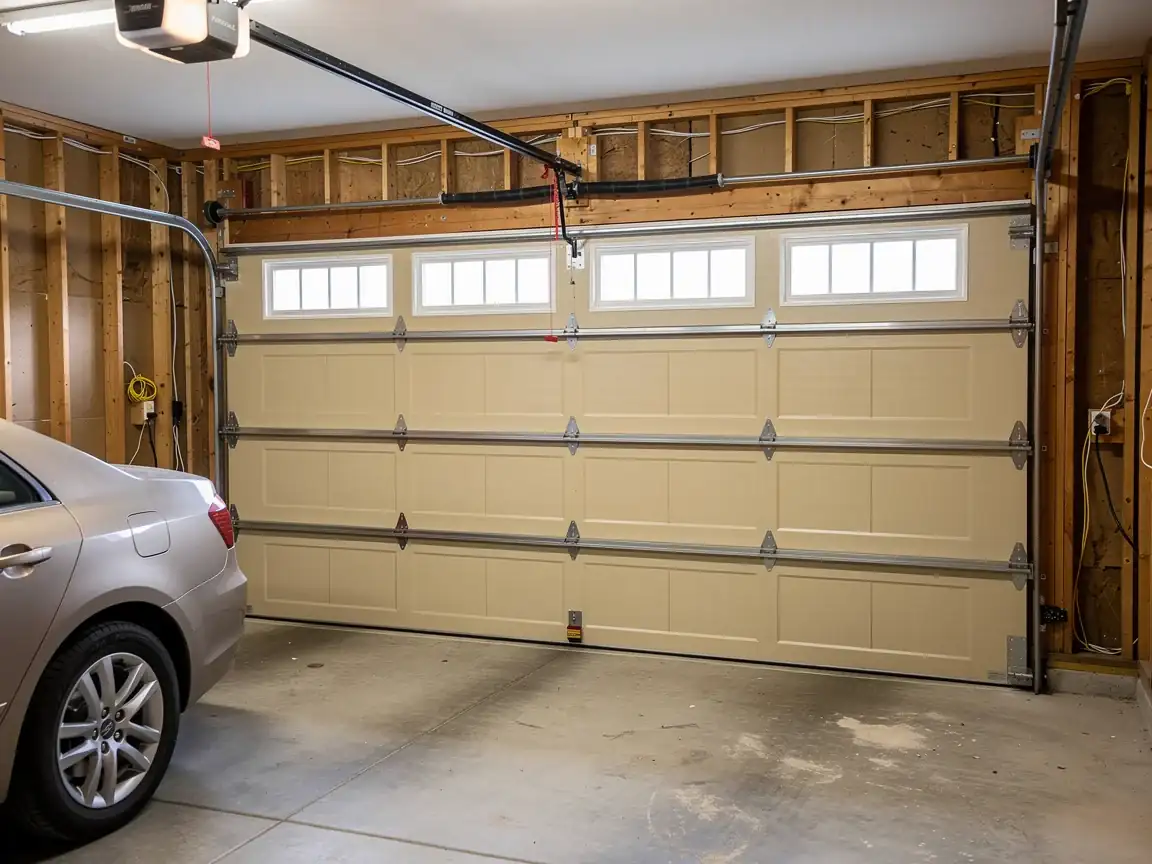
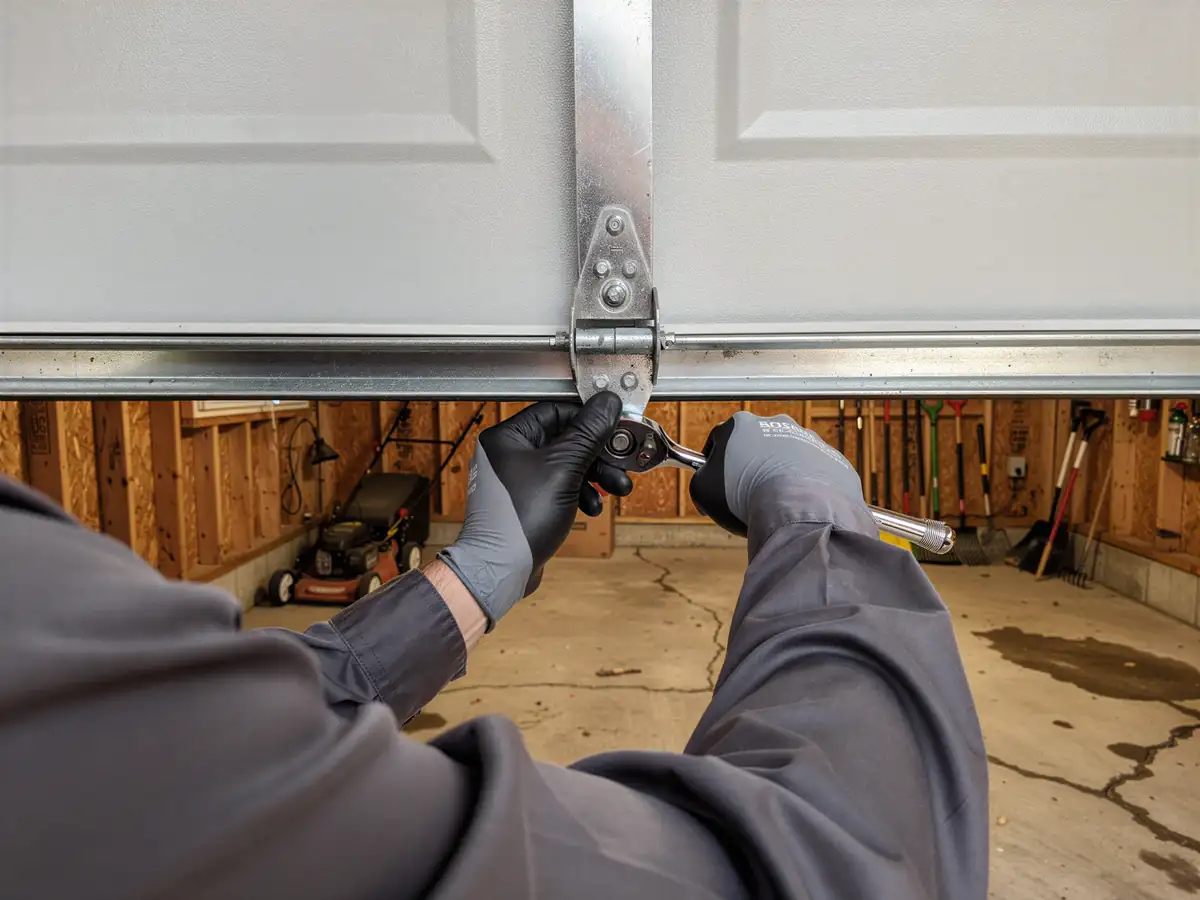
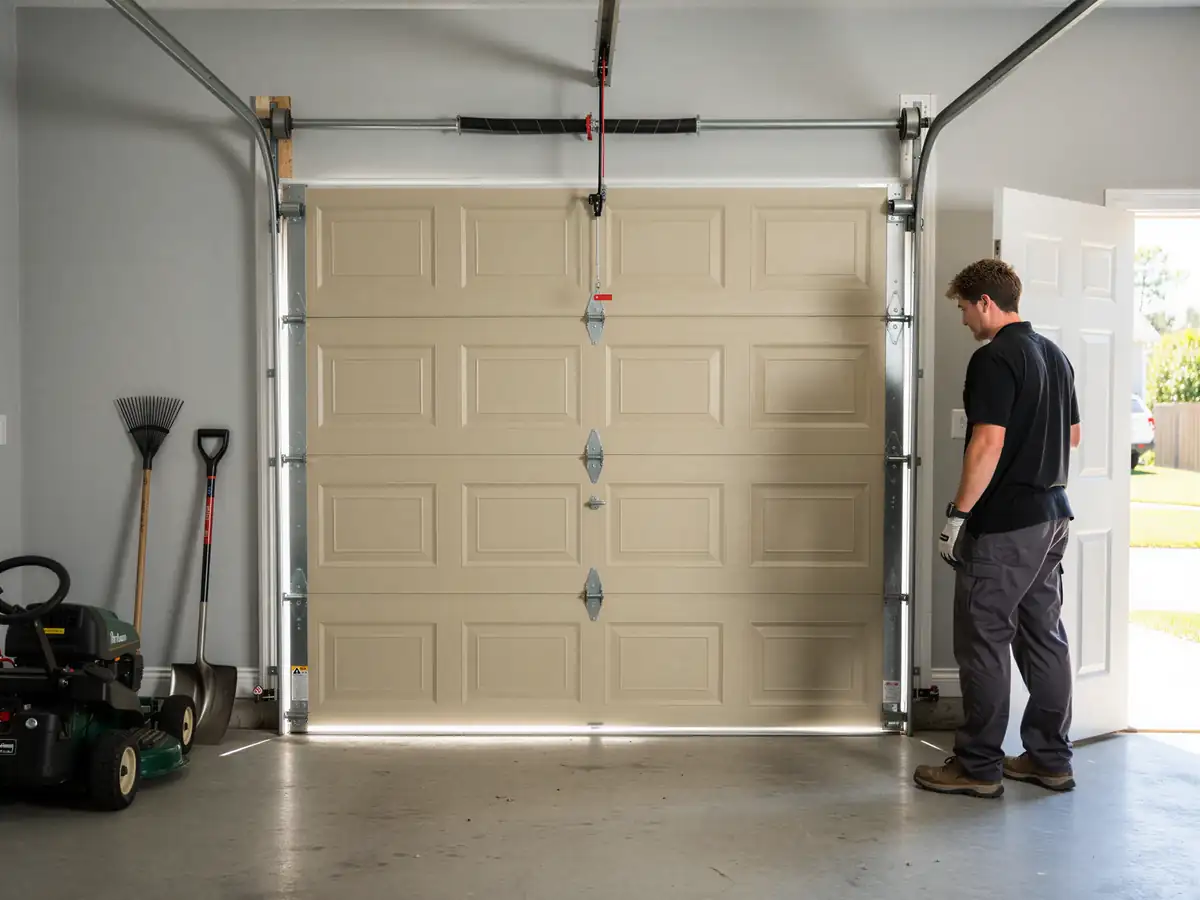
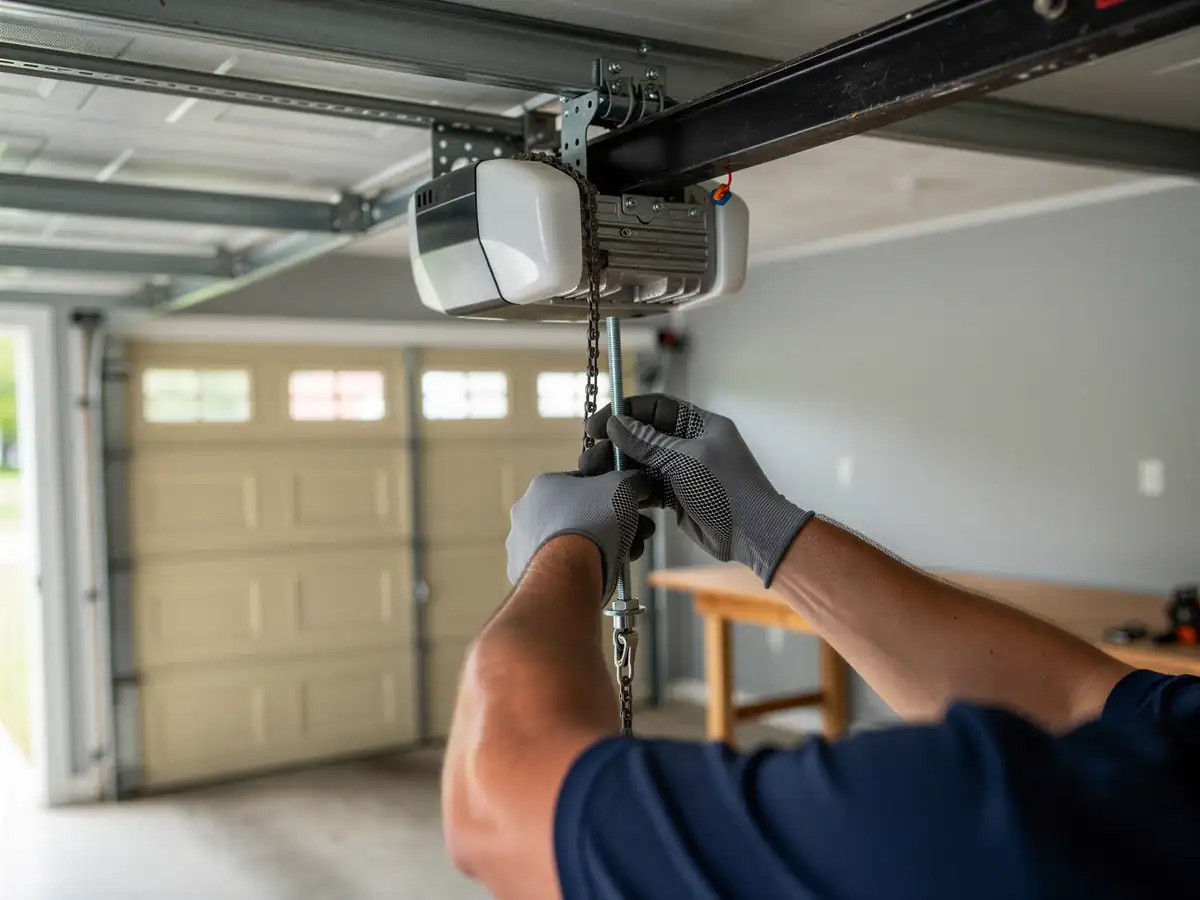
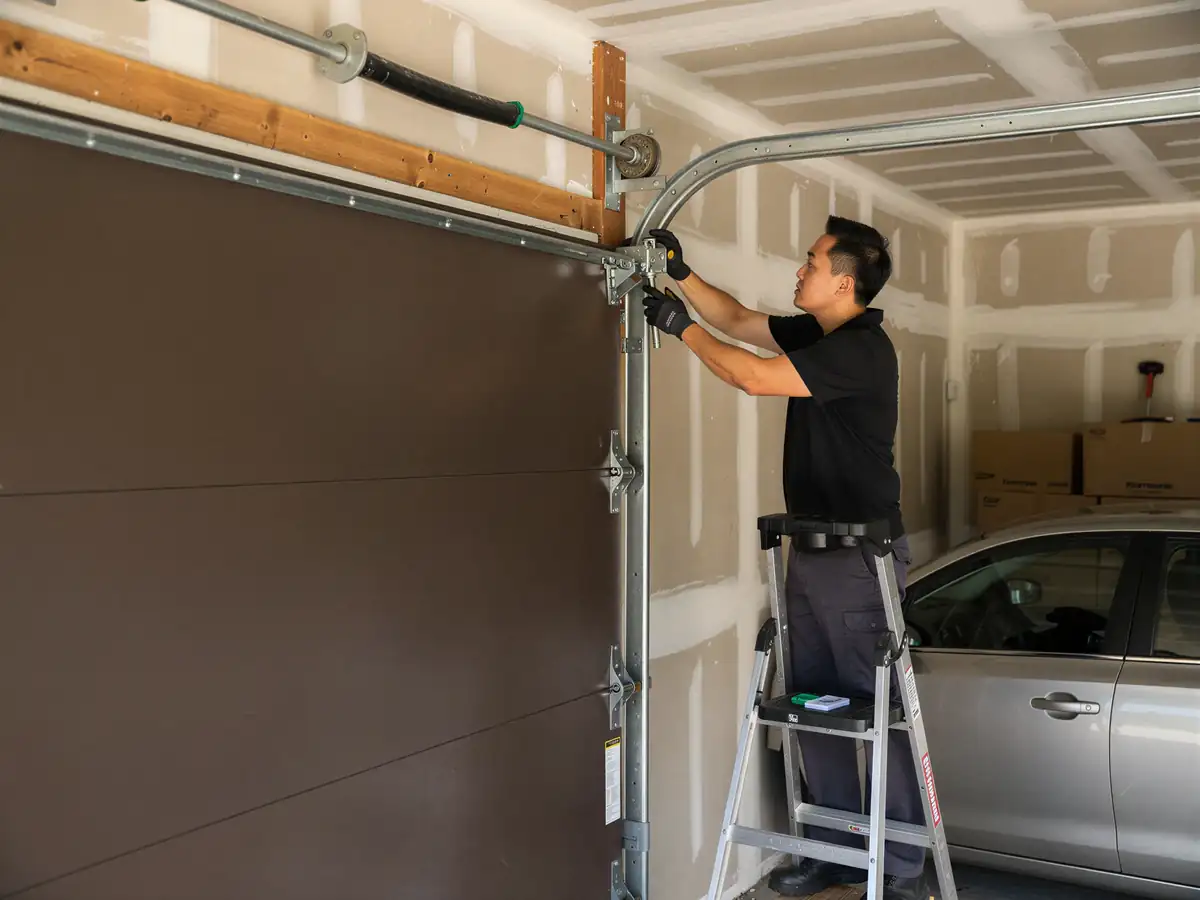
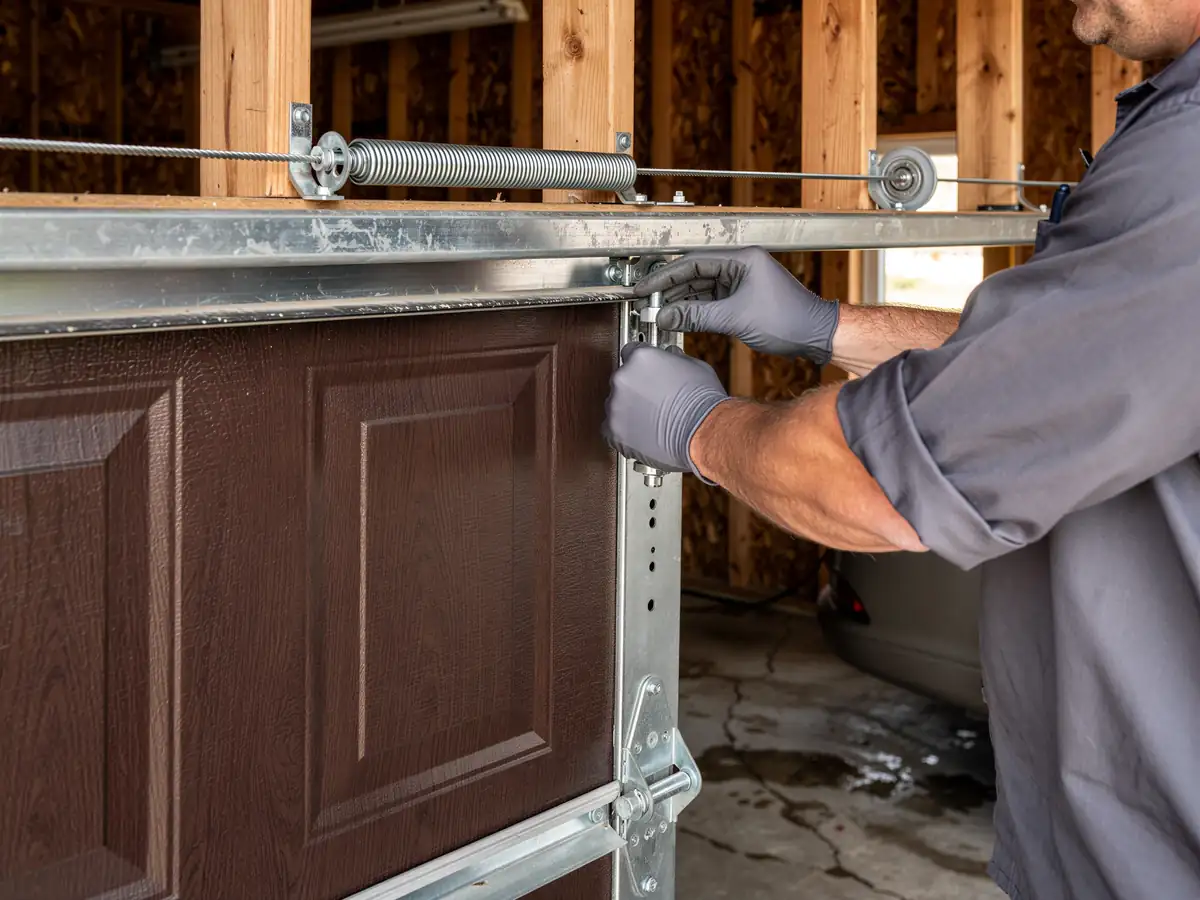
First step is getting the door back on track without forcing it - that means releasing tension safely, walking the panel back onto the rail, and checking whether the track itself is straight or just loose at the mounting points. A lot of Decatur jobs turn out to be the second case: the track's fine, but the brackets holding it to the framing have worked loose over three decades of cycles, and re-anchoring solves it without replacing steel. When the track is actually bent or kinked, we replace that section rather than trying to hammer it straight, since a straightened track rarely holds alignment for long. Once the door's back on the rail, we check the rollers and the opener's travel limits, because a door that just came off track will often need the opener's force and limit settings reset so it isn't fighting itself on the next cycle. We'll also flag if the springs or opener are old enough that this derailment is a symptom of bigger wear rather than a standalone fix, since on a door built around 1992, that's a fair question to ask.