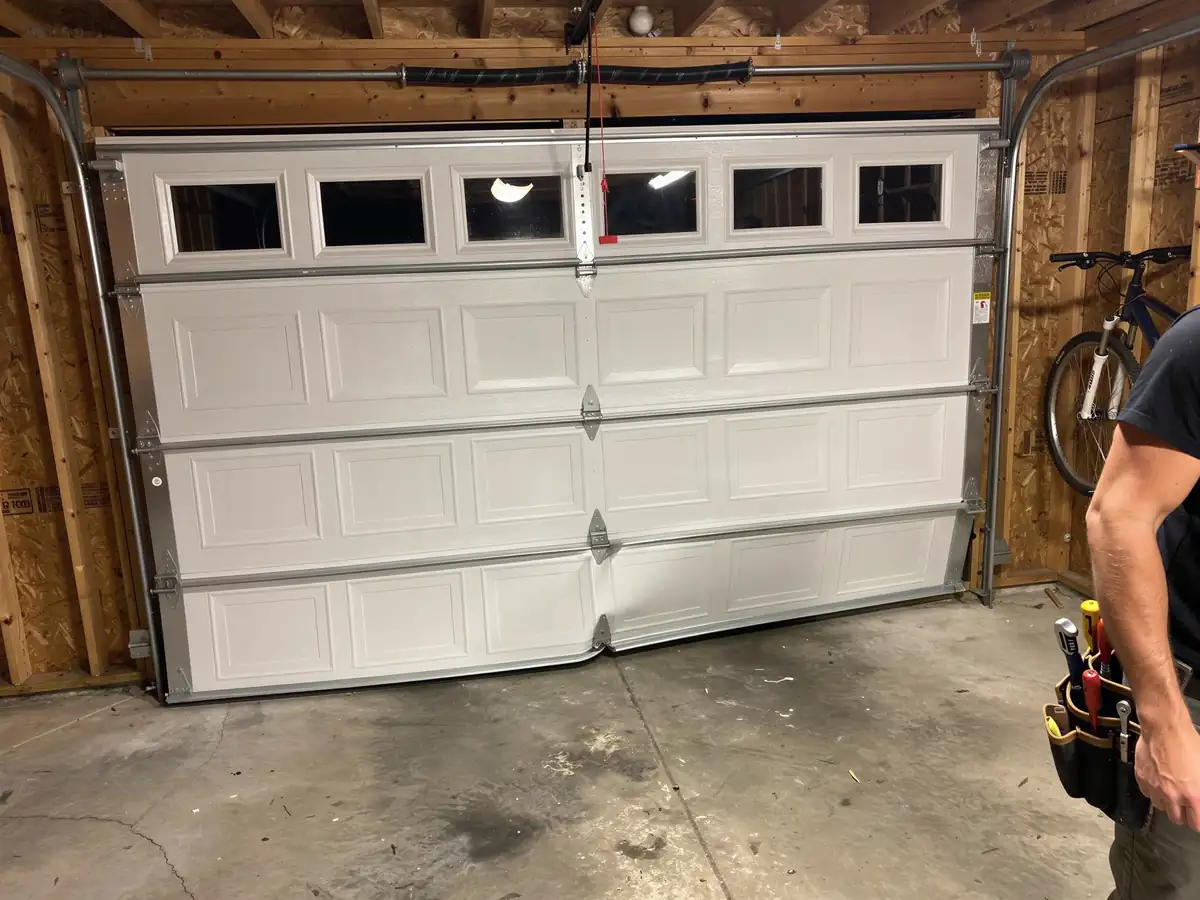
How It Shows Up
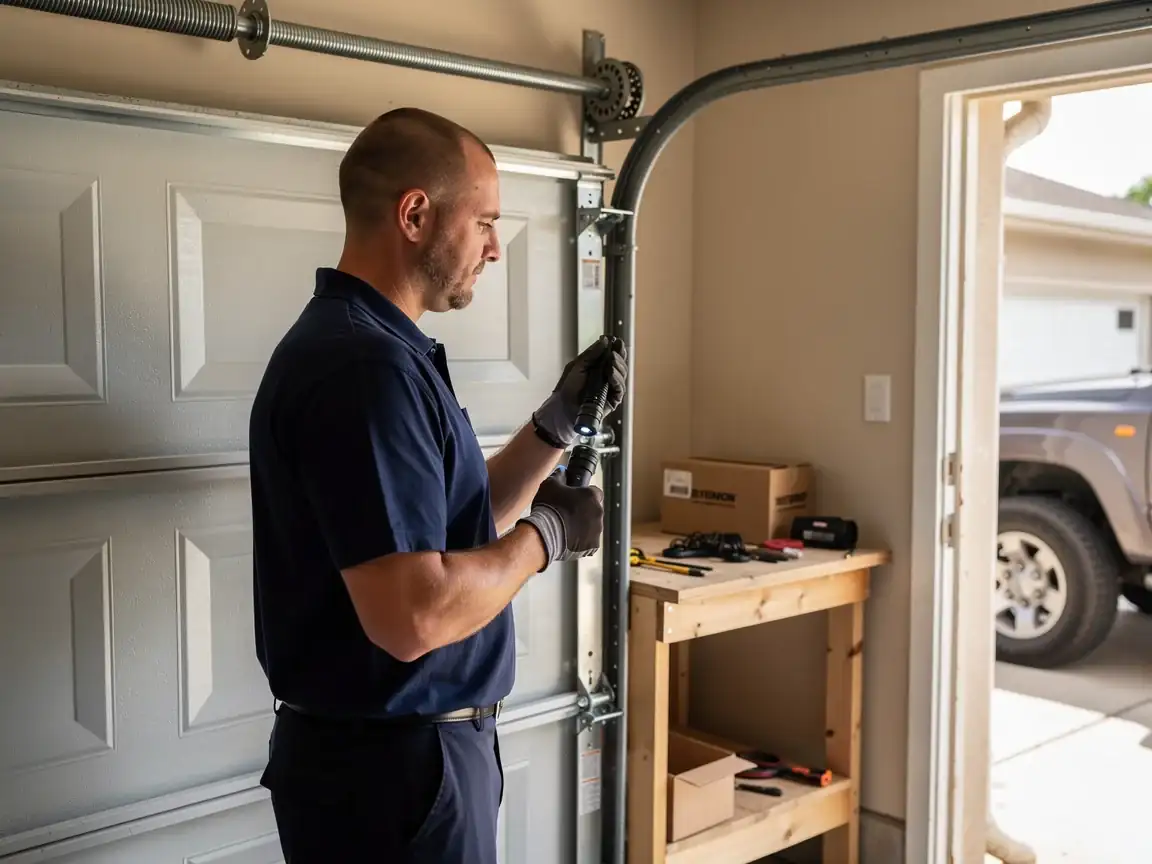
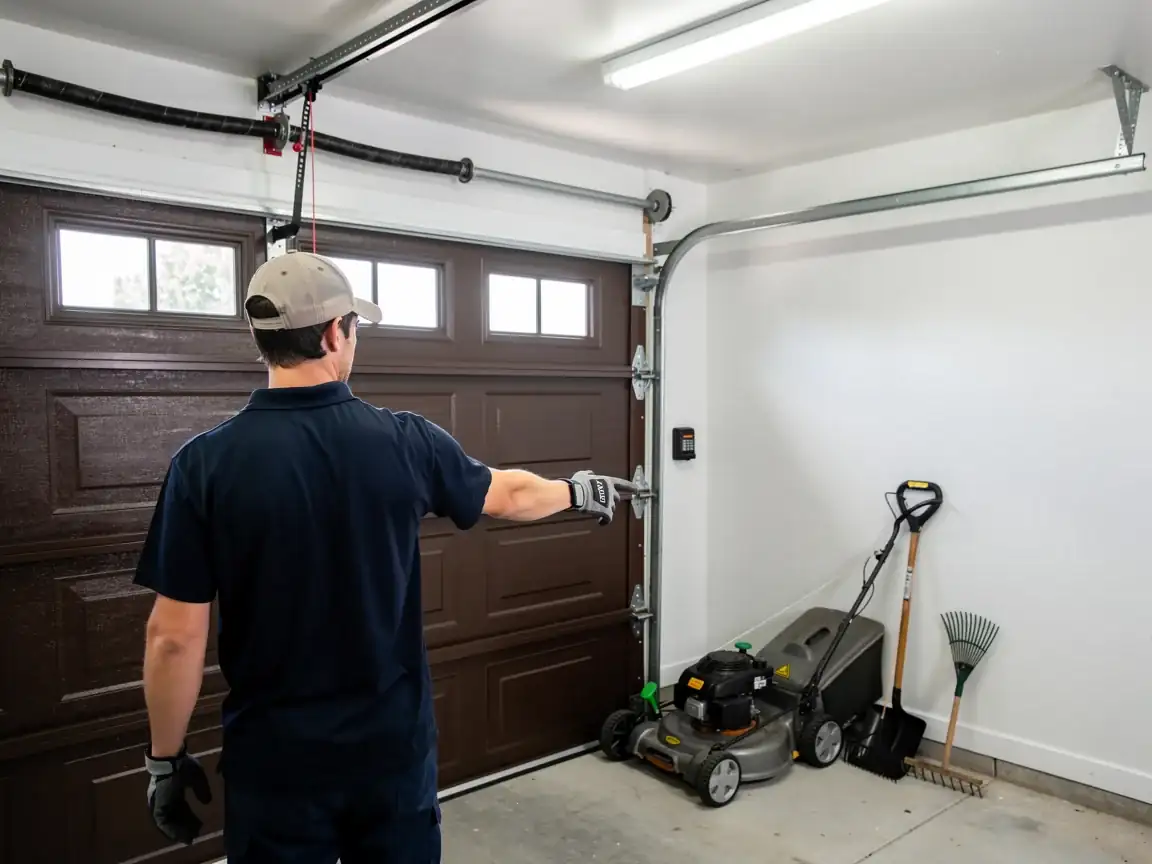
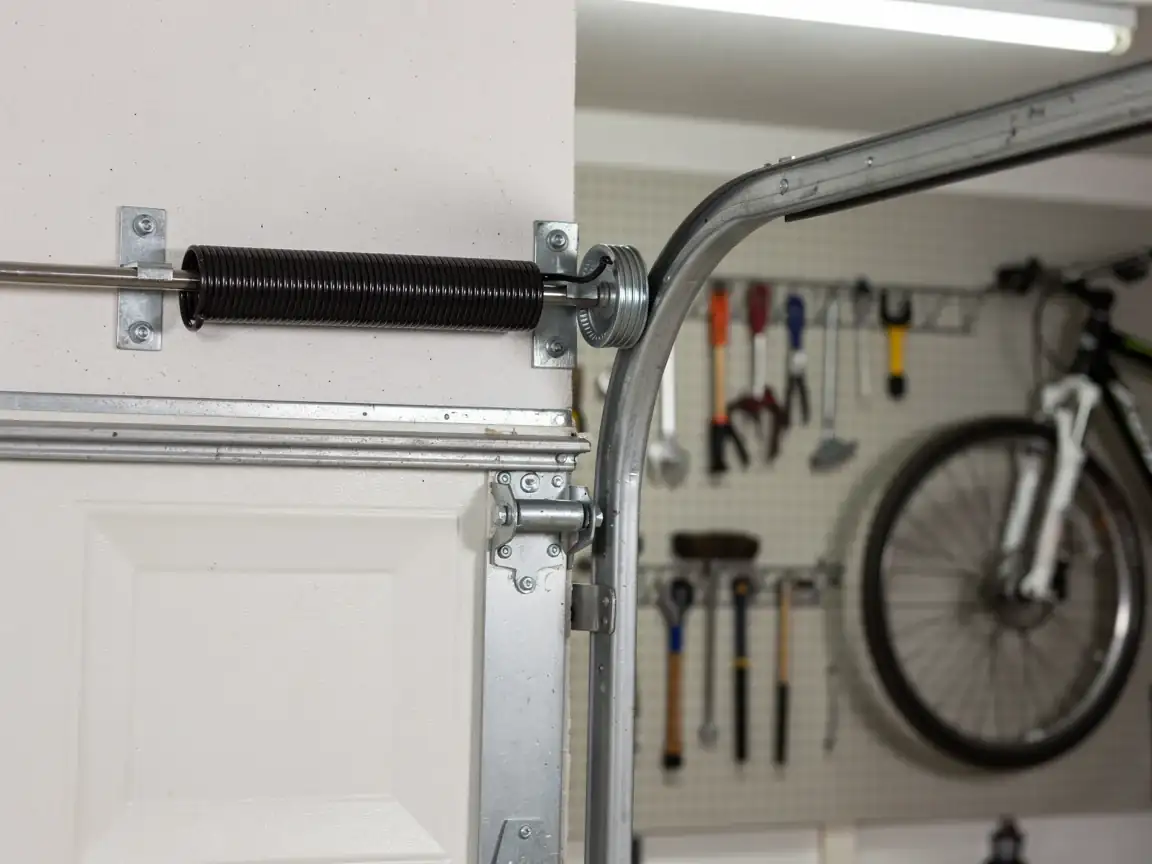
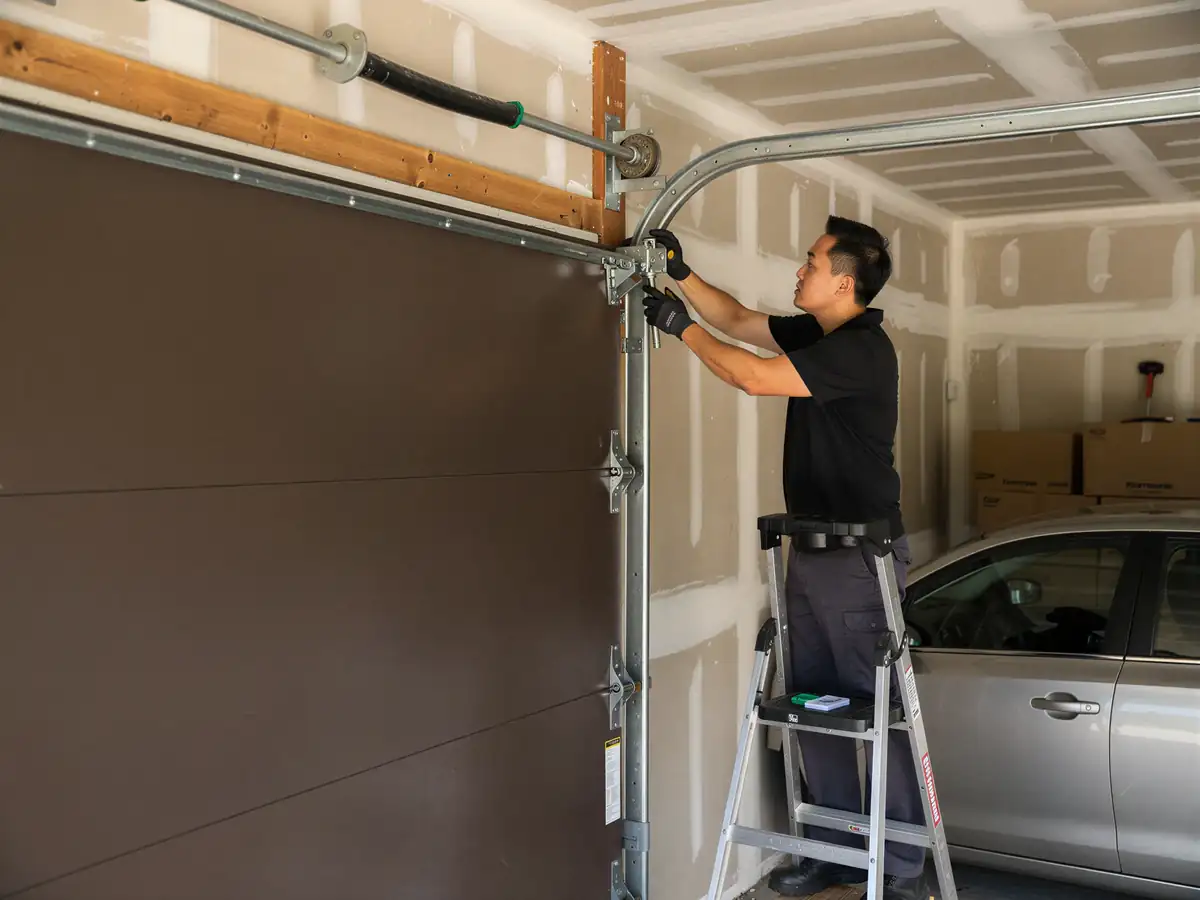
A door that's off its track rarely jumps clean off in one shot. More often it drags on one side first - you'll hear a scrape low on the frame, or notice the door sitting crooked in the opening before it stops moving at all. On hardware this age, the roller wheel itself is usually the first thing to go: the stem bends or the wheel splits, and the door walks sideways out of the track a little more each time it cycles. Sometimes it's the track itself - thirty-plus years of opening and closing works the mounting brackets loose from the jamb, and the whole rail shifts a quarter inch at a time until the door can't track straight anymore. Either way, running the opener once the door is visibly crooked usually turns a bent roller into a bent track, which is a bigger job. If the door stops partway and won't close the rest of the way, that's usually the track binding, not the opener failing.
Why This Fails Locally
Two things line up against an off-track door here. First, the age of the stock: a door installed around 1987 has had over three decades of cycles on the same rollers and the same track brackets, so the hardware is simply closer to the end of its working life than it is in newer construction. Second, Gravette's median household income, at $65,014, runs well under the $86,541 median across the rest of the area we cover - and in practice that means more owners here keep running a door after it's started scraping, because a service call competes with other bills. That delay is what turns a fifteen-minute roller swap into a bent track and a half-day job. The service area sits in a cold-moderate climate band, and the freeze-thaw swing through winter works loose hardware looser - a bracket that's slightly off in October is more likely to let go by February. None of that is unique to any one house, but it's a pattern that shows up more in an area built this tightly around one decade.
Doing It Yourself
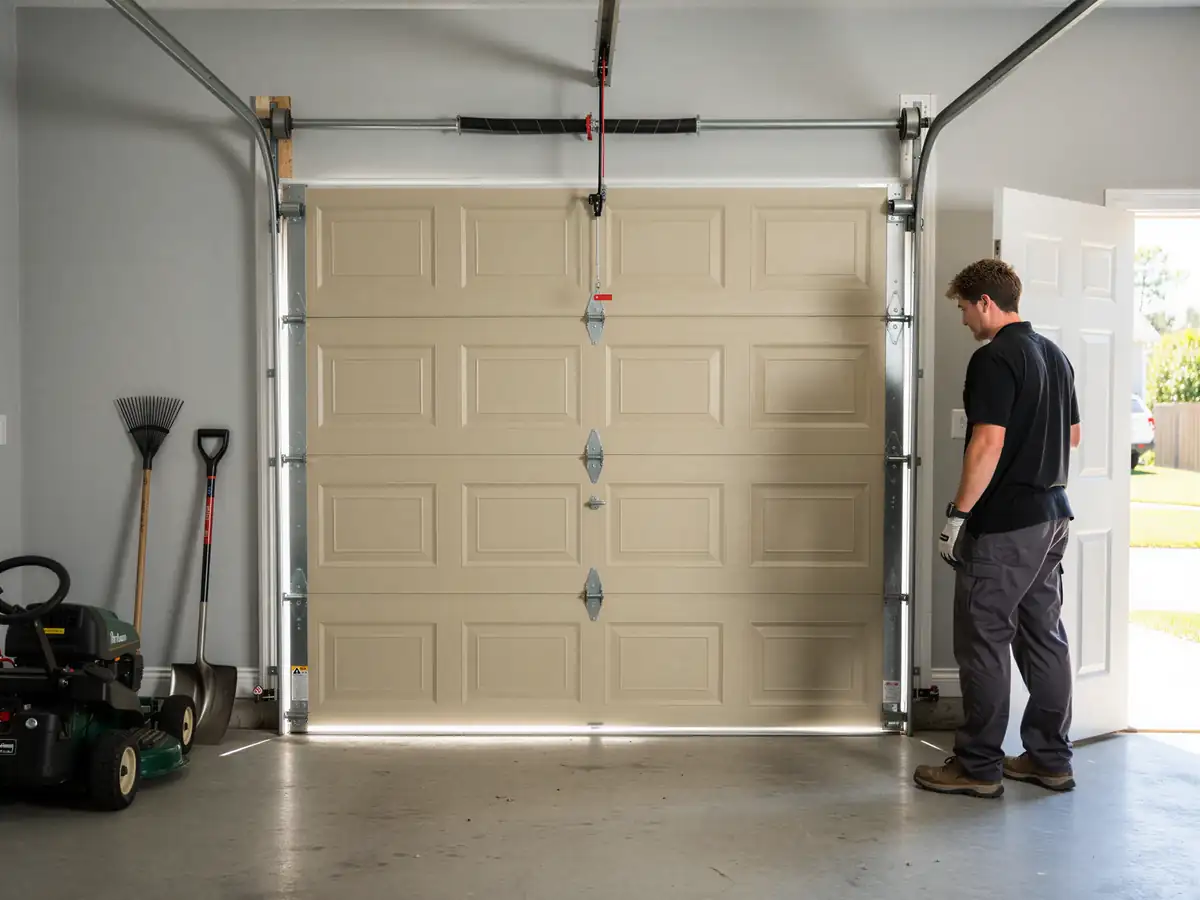
If the door is only lightly off and you can see daylight between the roller and the track, you can sometimes walk it back in by hand with the opener disconnected - never with power to the opener on, and never if a cable looks frayed or a spring looks stretched. Beyond that, we'd rather you call than force it. A door built around 1987 that's come off its track once has usually got a bent section nearby that isn't obvious from the garage floor, and pushing a bent track back into a bracket by hand just moves the bend somewhere else. We won't pretend every job is a quick fix - if the track bracket has pulled out of the jamb itself, that's wood or framing work alongside the door work, and it's worth knowing that going in rather than after we've started.