How It Shows Up
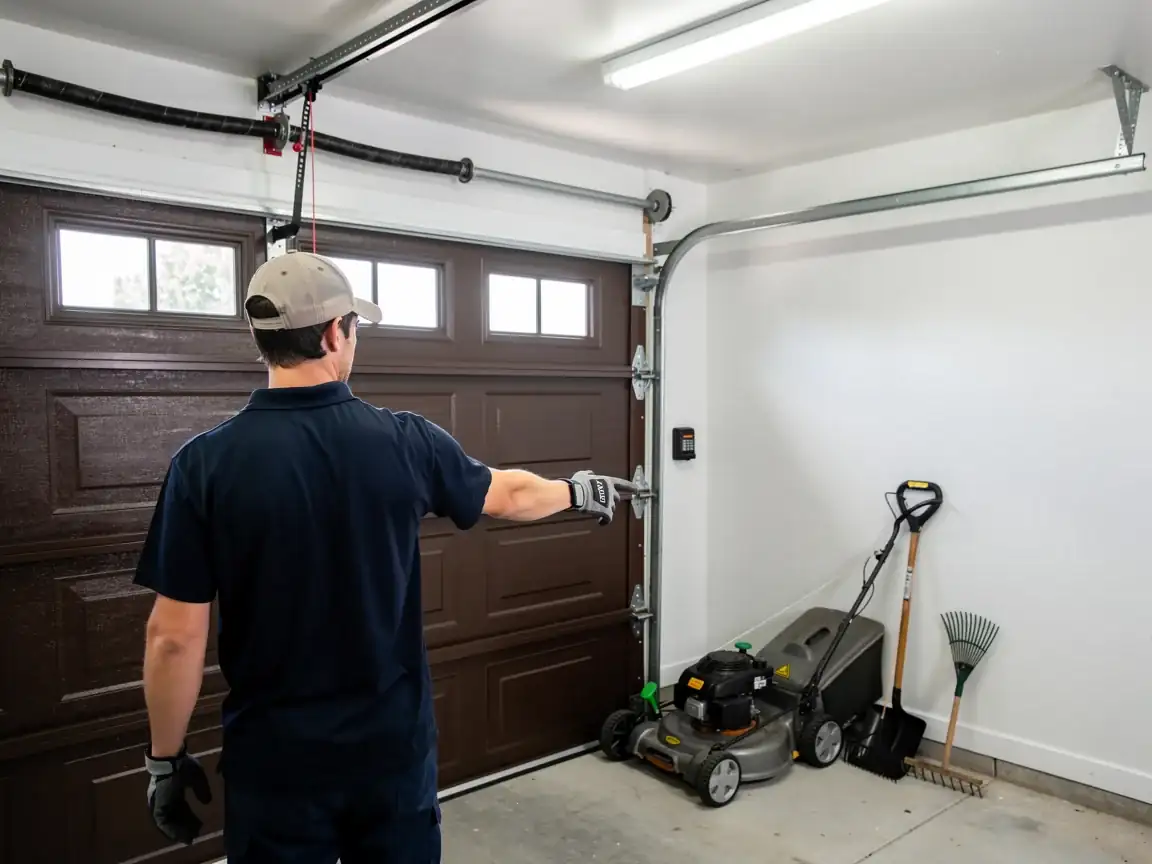
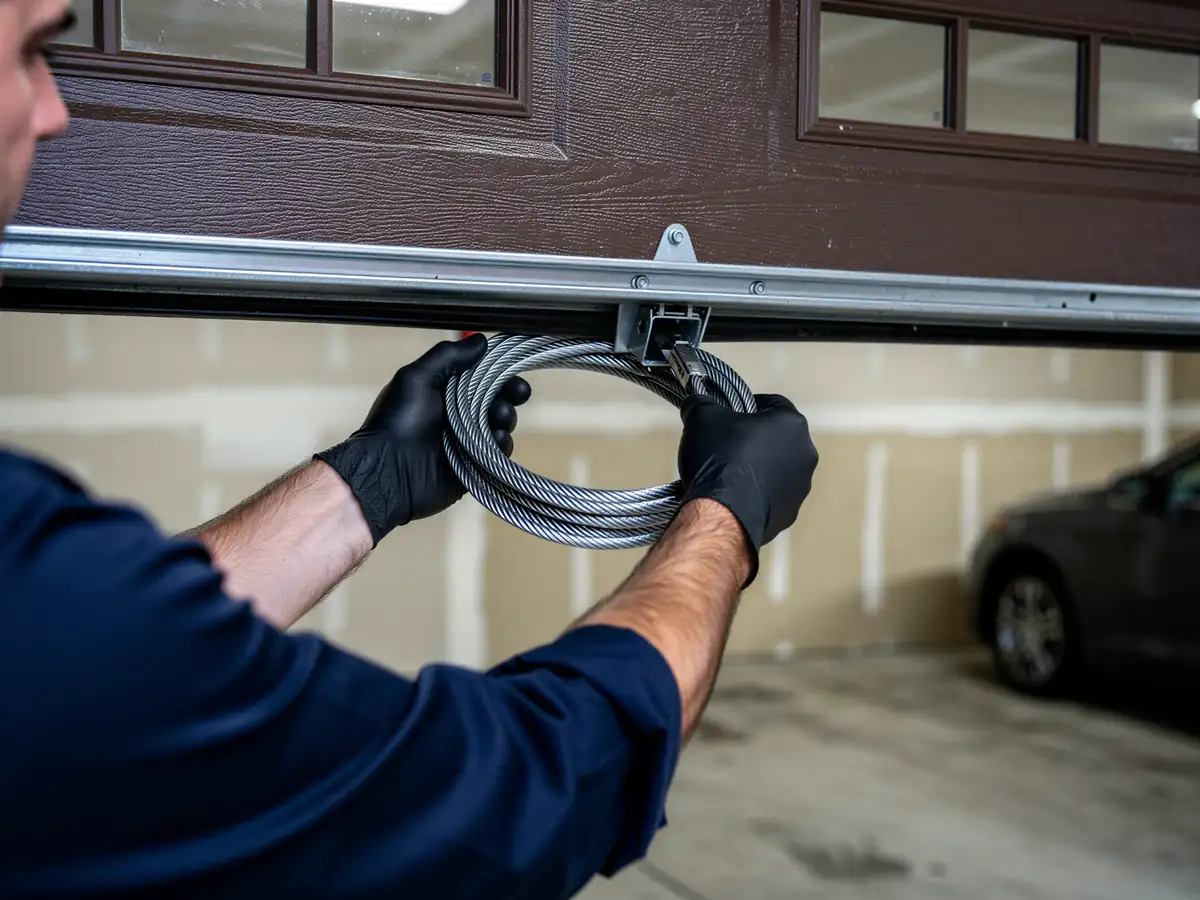
You'll hear it before you see it: a grinding or clacking that gets louder as the door nears the top of the track, where the curve puts the most load on the roller. Steel rollers from a 1997 build don't fail all at once - one corner starts dragging, the door racks slightly in the frame, and the opener has to work harder to pull it square. Left alone long enough, the roller stem wears thin and can snap, which drops that corner of the door onto the track rail. In this area's cold winters, stiff old grease inside the bearing makes the noise worse on the first cold-morning cycle, then it loosens up as the door runs. If you're hearing a pop or a jump partway through the cycle rather than steady grinding, that's a different problem - likely a cable or hinge - and rollers aren't the place to start.
Doing It Yourself
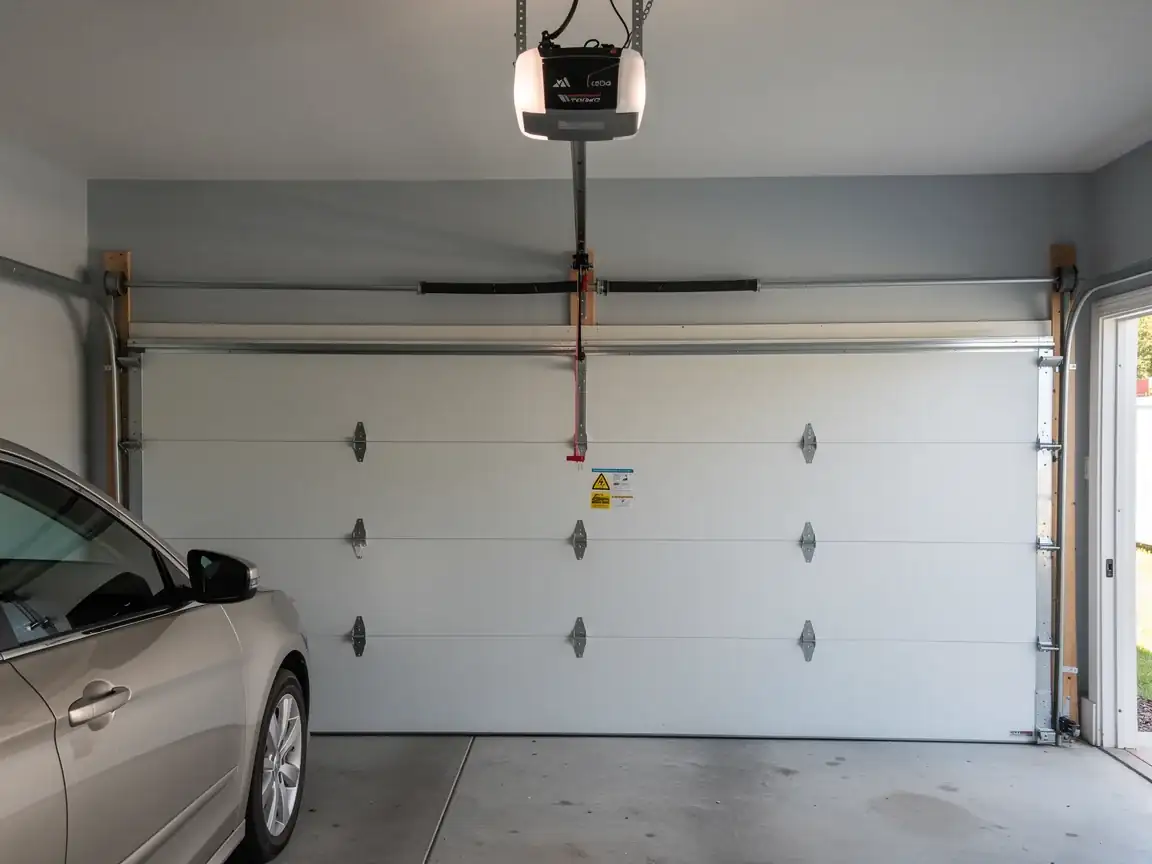
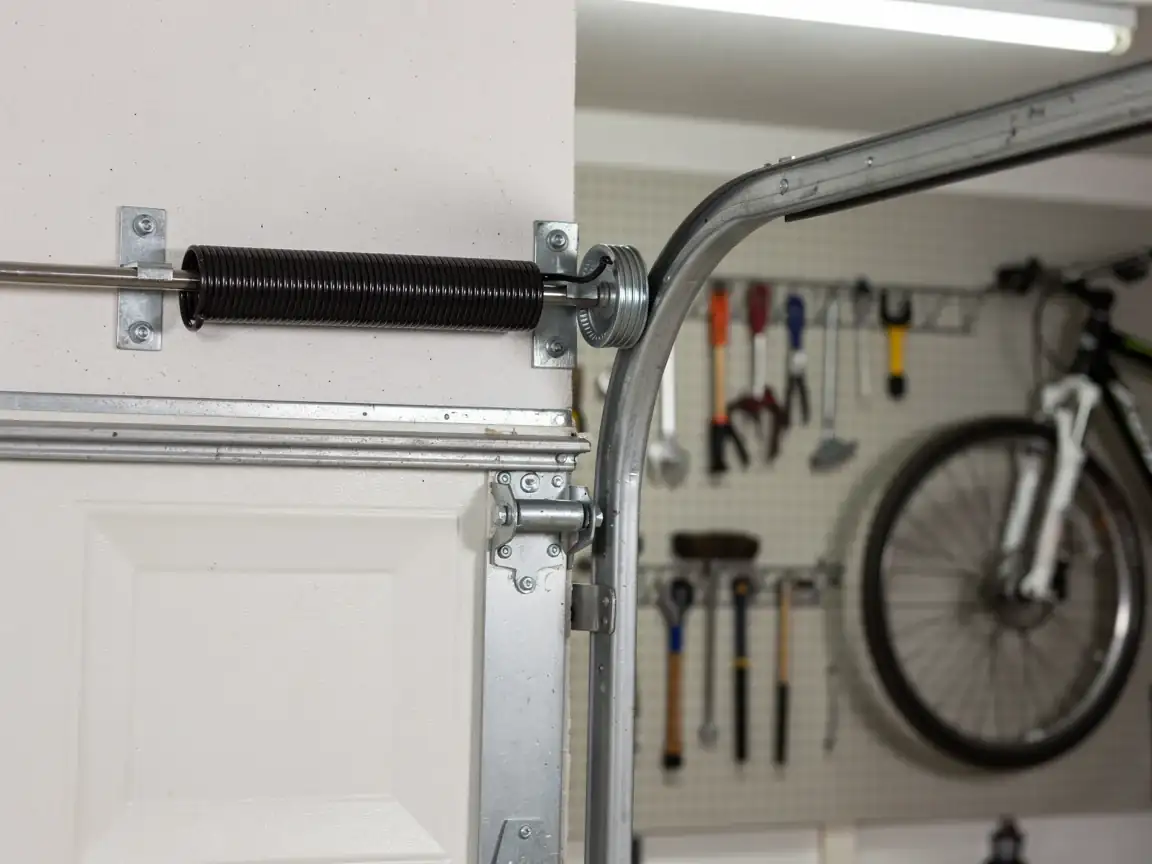
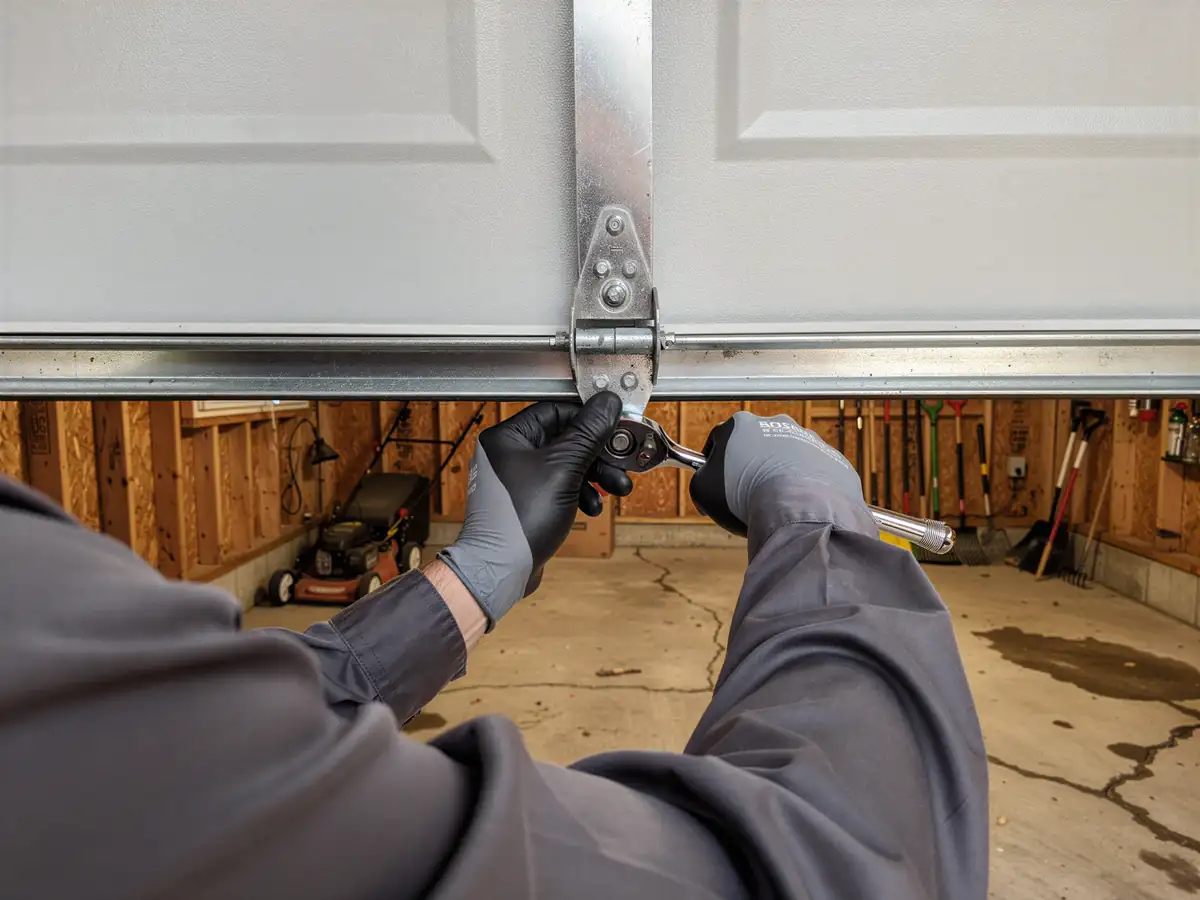
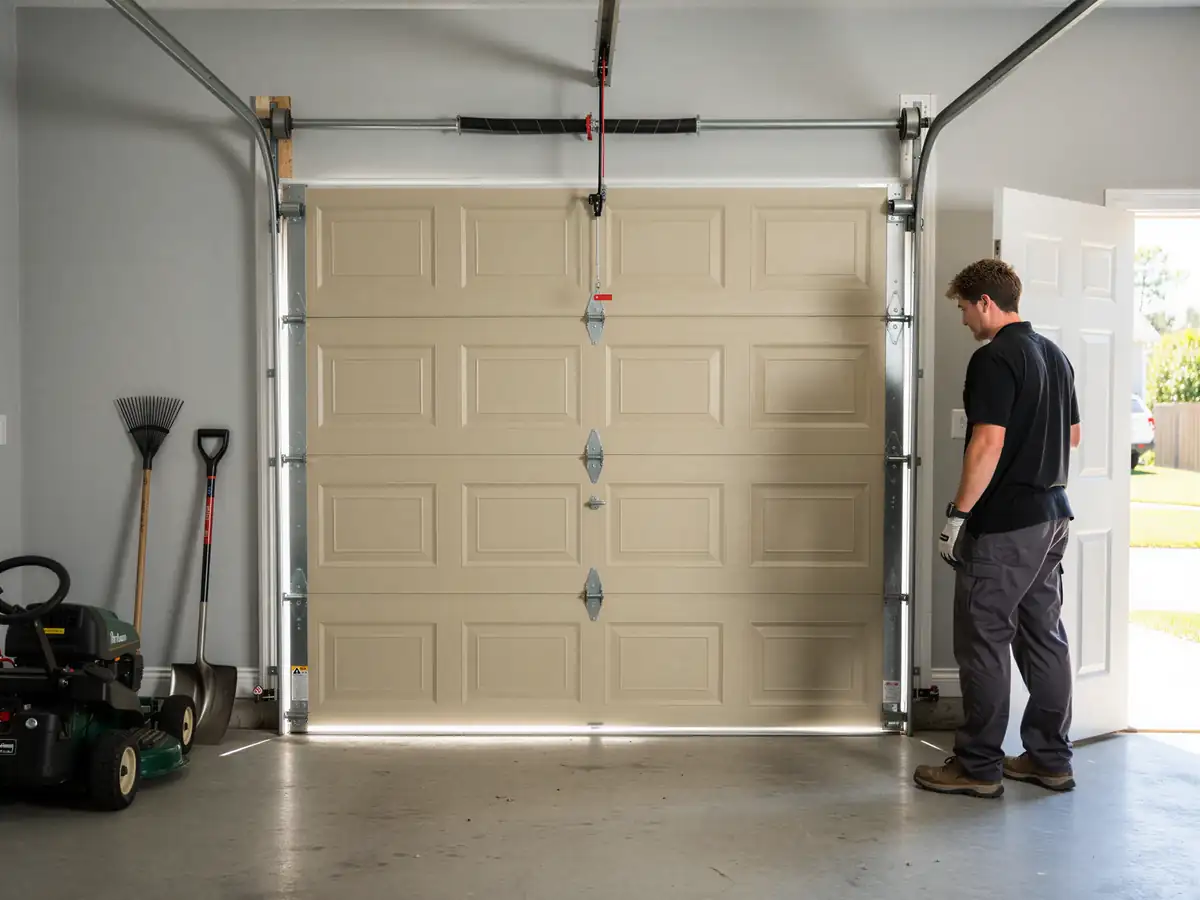
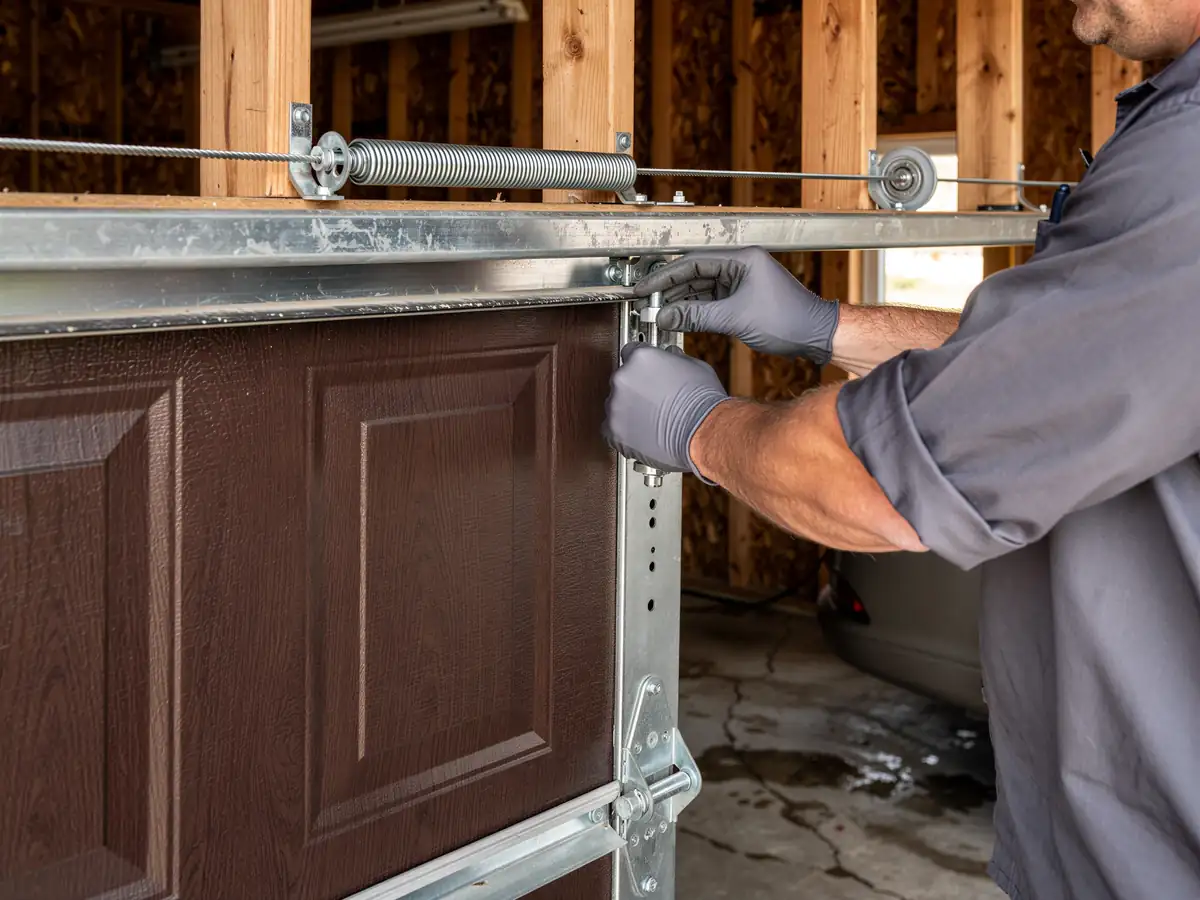
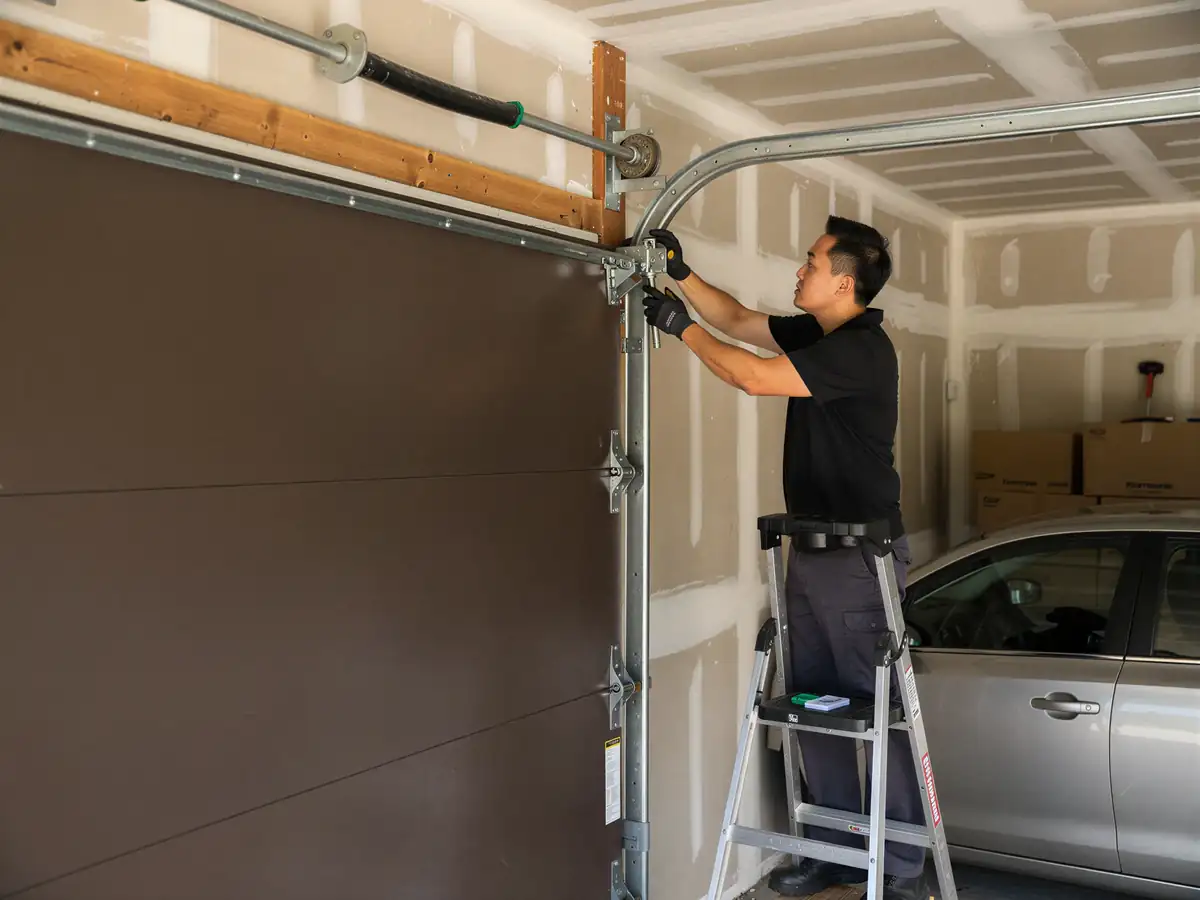
Swapping a roller on an unloaded section with the door down and the spring tension released is within reach for someone comfortable with hand tools - remove the bracket, slide the old roller out, slide the new one in. The part most people get wrong is the top two rollers on either side, which sit under spring tension from the track curve and can kick back hard when the bracket comes loose. If your door is original to a 1997 build, you're also dealing with 20-plus-year-old brackets that may be bent or rusted at the screw holes, which turns a ten-minute job into a bracket replacement too. We'll say plainly: full-set roller jobs on a double door, where you're working at height on both sides, are where most DIY injuries on this kind of repair happen. Single-roller swaps on a side you can reach from the ground are the more reasonable DIY call.
How We Fix It
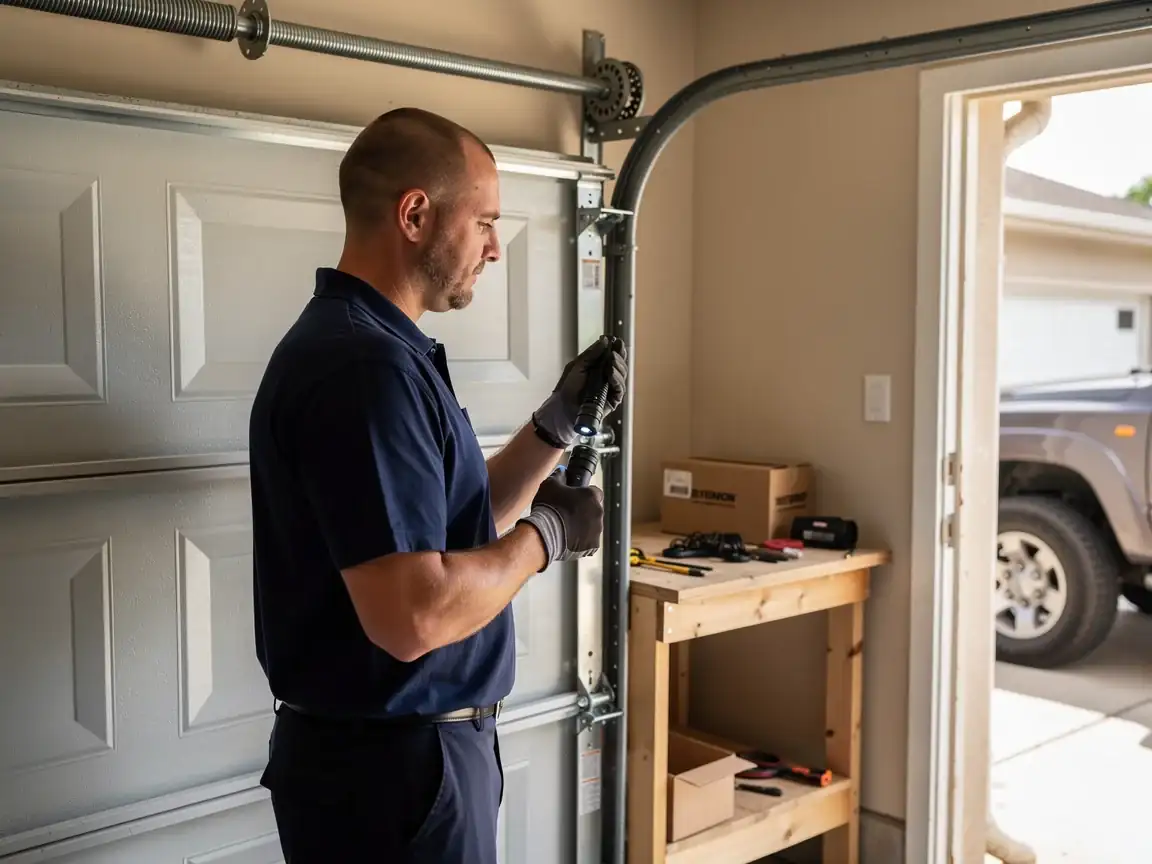
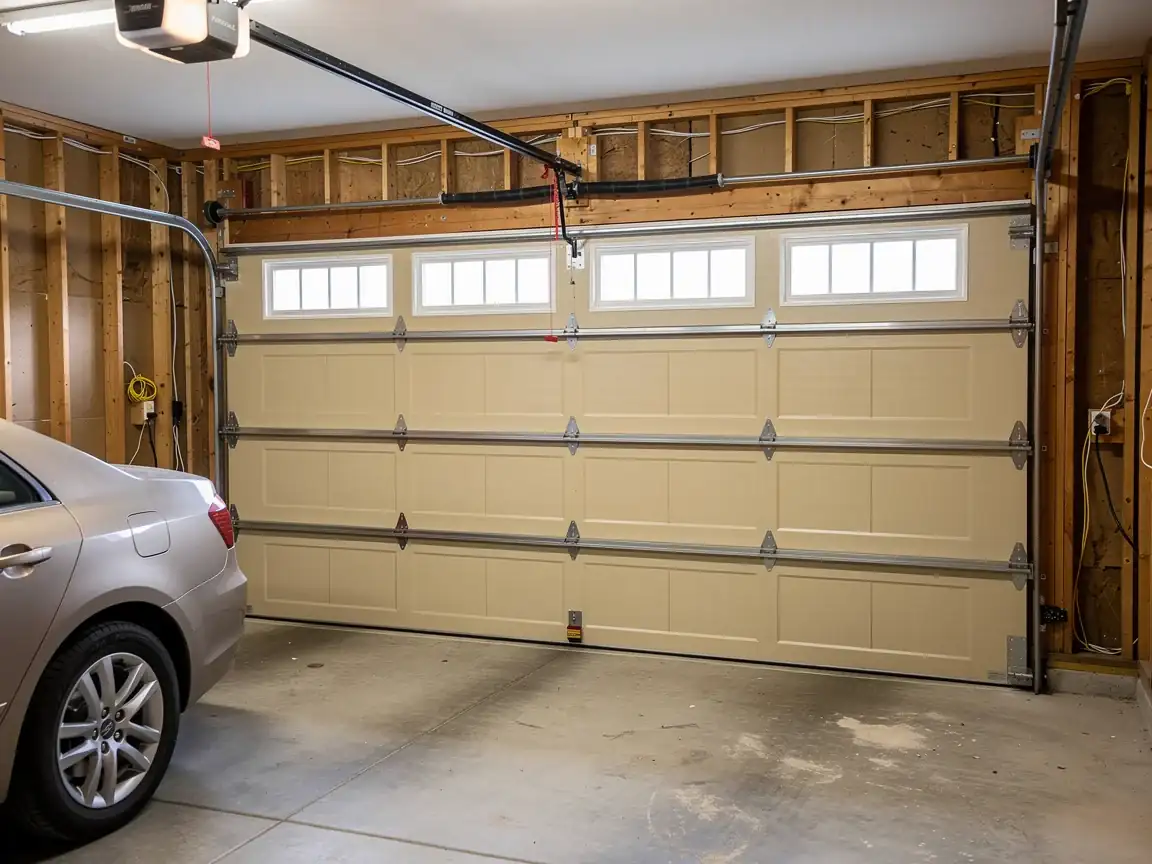
We check all the rollers on the door, not just the loud one, because steel rollers from the same build year wear at close to the same rate - if one's shot, the others are usually not far behind. We replace with nylon rollers on sealed bearings, which is what most doors in this age bracket get upgraded to now; they run quieter and don't need the periodic oiling steel rollers want. We'll also check the track alignment while the door is open, since a worn roller often leaves a groove or burr in the track that will chew up a brand-new roller just as fast if it's not addressed. If the bracket is bent or the hole is stripped from two decades of vibration, that gets replaced too - patching a bad bracket onto a new roller just moves the failure six months down the road.
The Complications
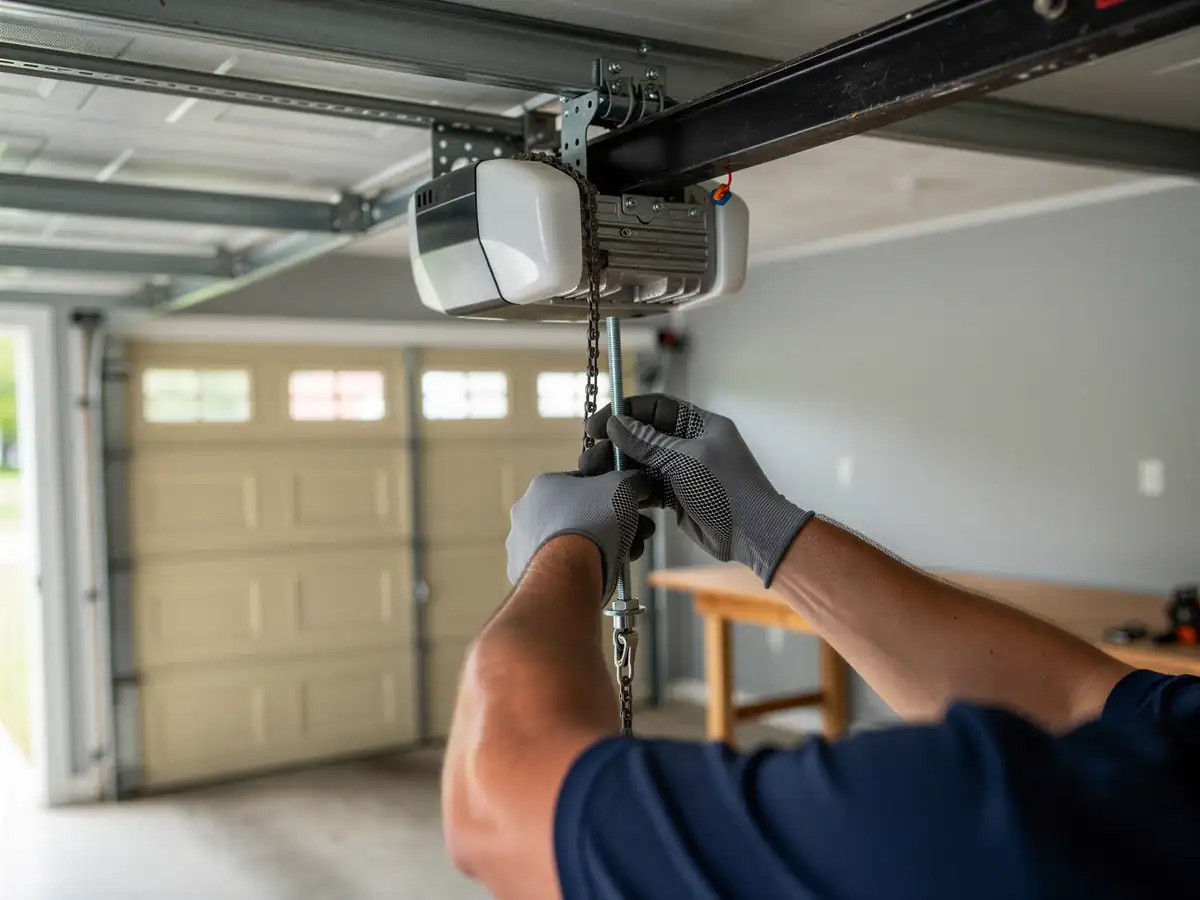
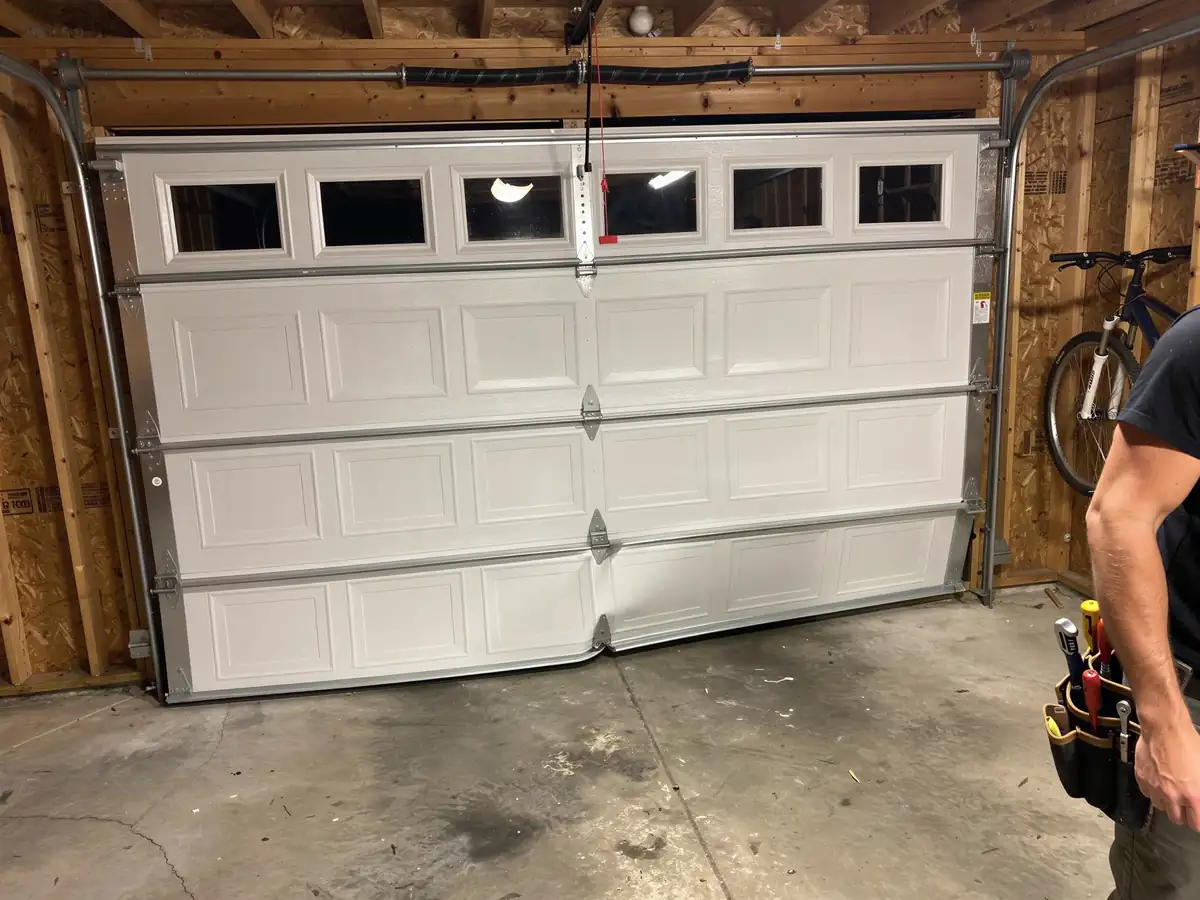
Not every noisy door is a roller problem. On a 1997-era door we sometimes find the actual cause is a worn hinge at the same location, and rollers alone won't quiet it. We also won't push a full roller set on a door where the panels themselves are failing - rusted through at the bottom, or warped enough that no amount of roller work will make it run straight - because at that point replacement is the honest answer, not another repair bill. And if cold weather has stiffened the opener's force settings along with the rollers, we'll adjust that while we're there rather than send you out with a door that still strains the motor.